Tuesday, November 28, 2006
End of Suburbia
Many of you will probably have already picked up that the documentary End of Suburbia is now available free to view on YouTube. I'm sure you'd rather watch it there, so the above is just a promo trailer.
I personally am now rather looking forward to the sequel Escape from Suburbia. But I'd much rather see a UK based documentary looking at these issues and possible solutions. If we're going to take thinking locally and bottom-up action seriously, local media is also essential.
The Ecovillage film being made by Undercurrents which I mentioned a couple of posts back is one example of this (a promo extract of this is viewable above), but I think we need a mixed ecology, offering many different options and ideas.
Monday, November 27, 2006
Design for sustainable Living - Now!
 This weekend I completed my Permaculture Design Course, a fantastic experience. I met some really great people – those teaching on the course, people we met on various visits (including OrganicLea, Growing Communities, Wholewoods, Soteriologic) and those fellow travellers attending. I’d like to send out a big thank you to everybody, many new friendships have been formed over the last few weeks, and long may they continue.
I did the course with Naturewise in
"provide a taste of what permaculture has to offer you and others both in theory and practice"
Hornsey Rise 31 March/1 April
Hornsey Rise 28/29 April
Hornsey Rise 26/27 May
Hornsey Rise 30 June/1 July
Hornsey Rise 25/26 August
Full Accredited Permaculture Design Course:
I feel that the alternate weekend approach is much more successful than the "2 weeks away" approach which is how many other PDC courses run. It is certainly easier to fit into working life, but it also provides time for reflection and for ideas to bed down, for new queries and confusions to be raised and answered.
For more information and to book places you should contact the wonderful Nicole:
08454582871 or samsara1964 [at] hotmail [dot] com.
Also you can check the Naturewise site to get a better sense of activities and the Naturewise vision.
Friday, November 24, 2006
Climate Change March

Just had my pictures from the Climate Change March processed. Above is the American Embassy, where it all began with speeches by George Monbiot, Caroline Lucas, Zach Goldsmith et al.

Here are the marchers leaving Grosvenor Square, through the tiny corner exit.
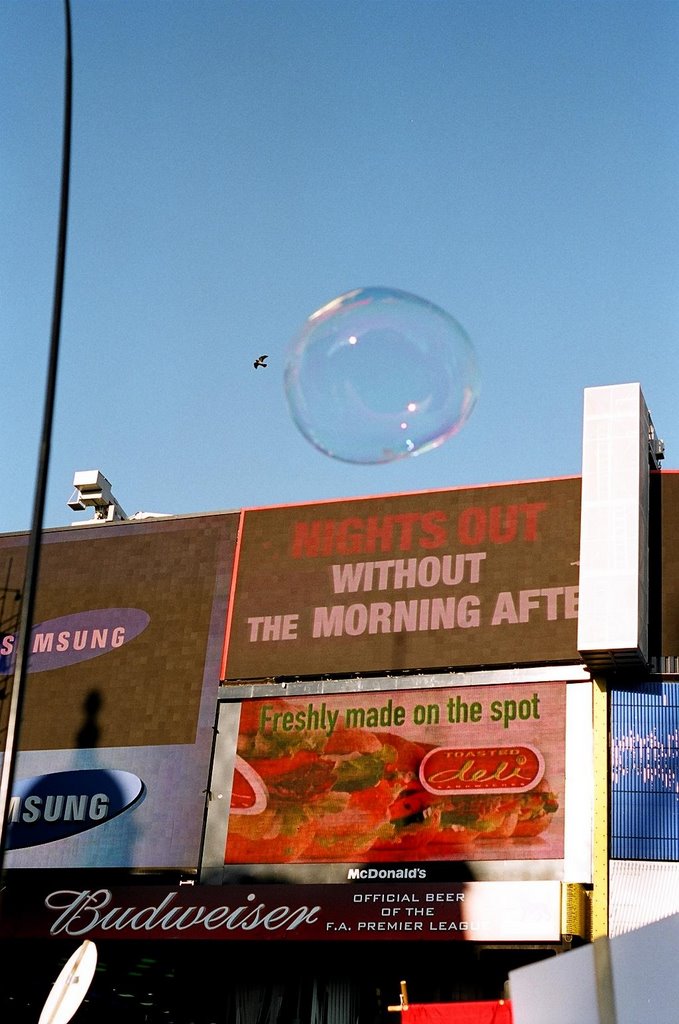
A bubble rising over Picadilly Circus.
 Watched from the sky, by the ever vigilant authorities!
Thursday, November 23, 2006
Life in the Round
 Hot on the heels of my talk about “inhabited geometry” it was great to see these pictures of Tony Wrench’s roundhouse at Brithdir Mawr, which the ever alert Keith alerted me to. They are part of a series on housing and ways of life in the UK, so make a synchronous follow on from my recent musings.
Keith, Helen and I are were privileged to meet Tony and visit his roundhouse early this year during our Permaculture Introductory Course with Angie Polkey. I didn’t notice it until we were about 6 feet away, so take it from me – it blends in with its surroundings!
 The photos on the BBC site are great and really communicate something of the magic of the place, they certainly bring back good memories.
Tony is involved with the Lammas project which intends to create a safe, low-impact settlement in
Tuesday, November 21, 2006


Monday, November 20, 2006
The 5 Questions
I’ve been reading a fair bit of Derrick Jensen’s work recently (as have my compadres Mark and Keith). It has been an interesting mind bath, that’s taken off some dirty thinking I’d missed earlier and revealed some sores that are sensitive to the hot water of his thought.
Keith has had some interesting thoughts on Jensen and his attitudes towards religion (is his tarring of all faiths with one brush a weakness in his usual incisive analysis?), and of course the question of violence is an ever present one. Jeff Vail’s “Derrick Jensen vs. the Dalai Lama” is a good starting point for that discussion.
A comment from Keith on the availability or no of video showing Jensen (we feel the need to see someone, to hear them) sent me off to find the above clip on YouTube/GooTube, and this and this on it’s daddy Google Video. The GooTube clip has Jensen asking you 5 questions and is part of the series put out by Dropping Knowledge.
Also some audio of Jensen available here.
SPAN, Lovely SPAN!
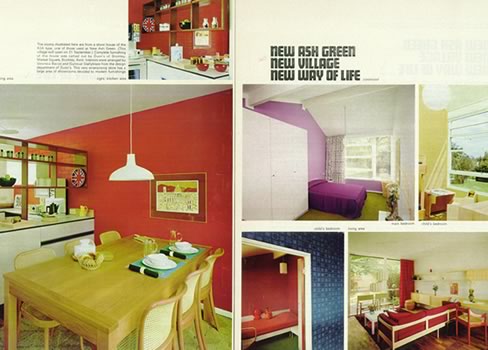 Last Thursday lunchtime, Rebecca and I visited the new exhibition at RIBA (Royal Institute of British Architects).
The small exhibition is on the work of the architect Eric Lyons and his SPAN housing.
"He placed three basic principles at the heart of the Span projects:
• community as the goal
• shared landscape as the means, and
• modern, controlled design as the expression. "

There was a symposium at RIBA on Saturday: 'Developing Span: Models for Arcadian futures?' – unfortunately I could not attend.
I personally quite like

I find that there is a human quality to this building style which is missing from most of our contemporary housing – and this despite the fact that they remain a series of boxes – not the more curvaceous shapes that appeal to my imagination.
I think that it is something to do with proportionality, the rooms feel ‘right’, in that they all appear to have a pleasing ratio of height, length and width (which may well have more to do the Fibonacci series than Feng Shui) that allow them to override the industrial nature of right-angled construction.


Which of these styles, if either, represents the best future for building in the
IMAGES: Magazine spread on New Ash Green from Ideal Home (October 1967), Cover of Ideal Home (October 1967), SPAN publicity brochure (1967), Interior of prototype ‘Home for Life’ designed by Roger Dean, Rainbow Ranch, Buda Texas – cob house built by the Cob Cottage Company, (1998).
Monday, November 13, 2006
Our Daily Bread
 Another one of those stories that makes a paragraph on page 12 of your newspaper maybe and is written as a casual news piece with no bigger picture contextualisation: the price of bread.
In other words – food is getting more expensive because of global climate change and the peaking of global energy supply.
Friday, November 10, 2006
Castles Made of Sand

As a long term fan of the airship, for their beauty and grace, their engagement with the ‘cruising’ element of travel – slow travel – if you will, I’m always pleased to hear about new developments promising their return to the skies.
While I’m waiting for a Hindenburg scale helium dirigible, with restaurants, state rooms, ballrooms etc. built using the best of modern knowledge and materials (see previous entry) – the flight of the more modest Spirit of Dubai over
The BBC Online story doesn’t shy away from energy descent future either, with Dick Chadburn, chairman of the Airship Association, and a former engineer manager at Shell quoted saying:
"In a world with very limited fossil fuels or restricted use of fossil fuels you have got to go back to the technology of your great grandfather - no cars, but bicycles. The airships could form part of that."

In light of this it’s intriguing that the Spirit of Dubai is travelling across Europe, Egypt and the Middle East (largely following the “all red air route” Alan Cobham mapped out for the 1930s British airships before the R101 disaster - and thence used by Imperial Airways) to Dubai.
It's advertising, en route, the “Palm Jumeirah”,
What I’ve always wondered is – in this peak oil future of energy descent – how anyone is supposed to get to


I imagine the whole place as castles in the sand, ruins of the (near) future being built now. Grander follies than the 6 storey towers the Anasazi nation abandoned, or even the empty buildings of
It’s a JG Ballard style urban dystopia in the making, and when I think about all those glass fronted tall buildings waiting for airborne travellers to descend and spend and save the place - then it reminds me of Jimi Hendrix too, singing:
"Look, a golden winged ship is passing my way"
And it really didn't have to stop...it just kept on going.
And so castles made of sand slips into the sea,
Eventually.
IMAGES: Spirit of Dubai over London, Dubai skyscrapers, abandoned Anasazi city, the abandoned Michigan Station in Detroit.
Engines of Indifference?
 For the first time in print, I’ve seen someone express how I feel about progress in computing – its from good old Ran Prieur in his November 9 entry, where he calls for an end to the wasteful use of processing power that’s become endemic:
“The people who most want to save high tech are doing the most to crash it, by reaching for more and more candy instead of working to build the stability that any enduring system needs. If we're going to have computers in 200 years, a computer maker has to say something like this:
We're holding the line at 1Ghz and 512MB RAM. We're going to keep making them that powerful forever. Instead of "improving" in speed and size, we will work on reducing energy consumption, reducing weight, making components that have less ecological footprint, last longer, and are easier to repair. And software designers for our machine will have to stay within the same technical limits, and make improvements in elegance and creativity. In 1000 years, our 1GHz machines will be hand-made from quartz crystals for five cents each, use captured sunlight instead of electricity, and beam pictures directly into your brain. That's progress, baby.”
A lot of my thoughts on this have their origin in me pondering on two things:
1) Computers in the
2) Influenced by the idea of Steampunk science-fiction, I often ponder how effective “old”, “outdated” technologies would be if now revisited with modern knowledge and materials. e.g. How efficient a timber driven steam engine could you make now? What new characteristics and abilities could ceramics and aluminium foam or Kevlar and other modern synthetics bring to these “outdated” way of doing things? Could they actually be more efficient than modern methods, or have other beneficial characteristics – e.g. in terms of health and safety, environmental impact, cost etc.??
As we move into an energy descent future, these are certainly areas we are going to have to look into – and how exciting that could be – isn’t this the real challenge of science and technology that inspired the great thinkers?
IMAGE: The London Science Museum's replica difference engine, built from Charles Babbage's design.
Thursday, November 09, 2006
Got Democracy?

As the dust begins to settle, and I reconnect with the news media after a period of ignoring it – I decided this morning to see what’s up with the US mid terms.
Well it appears that the Republicans took a beating, and that Bush is now a ‘lame duck’ president as they say. My initial feeling about this was, great – now violent action against Iran will have to come off the timetable. I don't see any solutions to the Iraq debacle coming out of Democrats taking some power though.
Anyway, that was about as far as it went, I don’t understand enough about US politics to really make much more sense of the whole affair. Then I thought – well let’s look at this a little harder and see if we can learn anything else from this election.
Only 40 % of the electorate bothered to vote, another great success for Western democracy! Is anybody asking how we can try and engage the USA with the idea of democratic politics? Not that UK/Europe is much better - everyone is sick with professional politicians.
I was intrigued by the ‘independents’ who achieved success, who are these people? what do they represent? It’s so below the radar of news coverage here – it’s very difficult to get much sense. Today’s Guardian reveals some interesting facts in its Election Roundup. Not least that this election sees a socialist voted into Senate – heaven forefend! Bernie Sanders seems to have the right kind of campaigning issues, if only there was more of this in the USA.
There have been some successes for the Green Party of the United States in municipal and mayoral elections. The first Green president, or indeed Green revisioning of governance, still seems a way off.
Ralph Nader’s comments on the election are available in an interview on the Democracy Now site – which, whether you like Nader or not, gives some insights to the US political process that I otherwise would have missed.
I couldn’t find much of interest in US Indymedia’s coverage of the elections, but it’s worth checking the site for a feel of what else is going on stateside.
Ran Prieur expresses the deep cynicism about the whole affair which I imagine is much more representative of grass roots feeling than these 'democratic' charades generally reveal.
Thursday, November 02, 2006
Chasing the Perfect
 My thoughts of a while back on Modernism in architecture and elsewhere, were rekindled today when Keith forwarded on an article by Natalia Ilyin from Adbusters.
 In “The Birth of Modernism” Ilyin considers how the First World War impacted on the shape and style of Modernism. She makes a brief but strong case for how Modernism is an architectural style born out of fear rather than love – using the biography of Walter Gropius as evidence in proof.
The idea could certainly do with a lot more fleshing out, but that fleshing out would be a worthwhile project and I think that she is on the right track already. Apparently this article is excerpted from her book Chasing the Perfect: Thoughts on Design in Our Time (Bellerophon Publications, 2006) - so I guess it's fleshed out there. If I didn’t already have a modernist skyscraper of books beside my bed to read, this would surely be added to the reading list (I’m banking on downtime at Xmas as my only hope now of getting this pile under control).