Human Ecology Writings
 The best of last year's human ecology writings are now up on scribd. Some of the formatting appears to be out - but the content is pretty much there.
The best of last year's human ecology writings are now up on scribd. Some of the formatting appears to be out - but the content is pretty much there.
Watch it here by clicking above. Taken from the source on Daily Motion.
(To good to be true (inconveniently) the producers would prefer you not to see this film for free I'm afraid. It's now been taken down)

Last Sunday the Renoir Cinema had a screening of “Ah! Sunflower” a 1967 documentary on Allen Ginsberg in
In the introduction Sinclair read from Kodak Mantra Diaries, an account of the period which formed his first prose work (recently republished by Beat Scene magazine). Forty years old, some of Ginsberg’s words at the conference The Dialectics of Liberation sliced through the intervening period. Prescience or a further record of how long we have had knowledge and not action?
We can leave the planet
We can destroy the planet
We’ve never had history with those possibilities
We’ve had little wars in
Or wars between America & Europe
But we never had a whole planet that could blow itself up
Or could destroy itself WITHOUT even blowing itself up
By destroying its forests
& changing its weather
& making carbon dioxide all over
Raising the temperature of the earth
Melting the polar ice cap
Causing a flood again

“I will say nothing about
Gandhi, Letter To Prema Kantak, October 16, 1946
In a ghoulish manner, but with an intellectual excuse to paste over my amorality I went on to YouTube last week found the full version of the Saddam execution and downloaded it (using firefox/greasemonkey) [I wont post a link to that, I’m sure you can find it yourself if you “need” to].
In the presentations I do on
An obvious historical event to use as a point of comparison seemed to me to be the
Gaumont British News devoted a whole issue to the verdict and sentencing of the Nazi's - however it states that they were not allowed to film the sentencing. Using images of the court doors being closed in front of them they overlay audio of Goering being sentenced to death by hanging. Gaumont did not cover the executions themselves at all (in the first issue after the executions took place Gaumont leads with racing from
British Pathe News issued a story over the dilemma of whether or not to show the executions, preceding the hangings they ran a screen and press publicity campaign asking their audience their opinion. They received 980 replies. 950 of which stated they did not think the hangings should be shown. The Pathe story also mentions questions being asked in the House of Commons regarding the showing of the executions.
The American edition of Universal News, illustrated the execution part of their coverage with footage of American soldiers hanging a weighted dummy from the gallows, thus getting their money shot without showing the real deal.
British Movietone News featured the American reporter Kingsbury Smith, the only journalist to witness the executions, speaking about what he saw of the Nazis being hanged, including the detail that following the hangings the dead body of Goering (who committed suicide a few hours before the executions) was brought in to demonstrate to the witnesses that he too was dead. Kingsbury Smith didn’t reveal in this piece, as he would in print, that a miscalculation of the weight of Julius Streicher meant that he did not die instantly:
“He went down kicking. When the rope snapped taut with the body swinging wildly, groans could be heard from within the concealed interior of the scaffold. Finally, the hangman, who had descended from the gallows platform, lifted the black canvas curtain and went inside. Something happened that put a stop to the groans and brought the rope to a standstill. After it was over I was not in the mood to ask what he did, but I assume that he grabbed the swinging body of and pulled down on it. We were all of the opinion that Streicher had strangled.”
Kingsbury Smith, The Execution of Nazi War Criminals, 16 October 1946 for the International News Service
Saddam Hussein's execution, in addition to everything else it is, seems emblematic of a new era of the audio-visual medium – one that circumvents the mainstream media, News or otherwise. This event was filmed on a mobile phone, spread around the world using P2P technology and then further distributed, manipulated and repurposed on web 2.0 sites like YouTube.
It shows what the mainstream news media will not show (and perhaps for very good reasons). [The Guardian faced harsh criticism, including from a large percentage of its own journalists for showing a still from the film on its front page]. It fits into a genre that includes the militia beheadings from Iraq - and has a relationship with the "last messages" of suicide bombers, Jihadi propaganda from around the world (check Internet Archive for the Chechen and Ossetian end of this), but also the footage taken in Falluja by US Marines helmet mounted cameras (available on YouTube in both "raw" formats and in versions edited to heavy metal soundtracks - glorifying the destruction taking place). Since
Of course there is also that argument that it is pornography that leads new developments in audio-visual technology - and perhaps all this stuff is pornography too? Hearing about some piece of film featuring this internationally known figure in a compromising position that the media wont show, knowing that you can probably find it on the internet, searching for it, downloading it, sharing it with others - are we talking about the execution of Saddam Hussein or 'One Night in Paris'? What are our motivations?
Calculating future sea level rises seems to be an inexact science - there are just far too many variables - this however is not a reason for complacency - quite the opposite, when you cannot be sure of the degree to which an effect will manifest then you have to include the conceivable worse case scenario in your planning.
The online version of the journal Science recently published an article titled ‘A Semi-Empirical Approach to Projecting Future Sea-Level Rise’ by Stefan Rahmstorf of the Potsdam Institute for Climate Impact Research. This article suggests that the sea level rise predictions made by the Intergovernmental Panel on Climate Change (IPCC) in their Third Assessment Report (2001) under-estimate the actual likely increases. Using the initial data produced by the computer models of the IPCC and additional empirical information gained through observation, the researchers for this article found that in 2100 sea levels would be 0.5-1.4m above 1990 levels. This contrasts with the 9-88cm forecast made by the
The IPCC issue their Fourth Assessment Report in February 2007 and it will be interesting to see how their predictions may have altered.
Meanwhile, why not check out this site which Keith linked me up to, which allows you to see the effect of varying degrees of sea level rise on the geographical location of your choice. And remember this information does not include storm surges, freak storms, hurricane of tsunami effects!
The animation at the top show the predicted decline in Arctic sea ice courtesy of the US
A Trailer for Escape from Suburbia, Greg Greenes’s sequel/follow-up to The End of Suburbia is now available via YouTube/Google Video/BitTorrent and here! (The trailer can also be downloaded from their website, but this is a dis-preferred option as it increases their bandwidth costs).
Escape from Suburbia is currently due for release in March 2007, you can put your name down to pre-order the DVD on the documentary’s website, they are also accepting voluntary donations to help fund the project.
The End of Suburbia (2004) quickly seemed to become a major consciousness raising tool for Peak Oil awareness, and is still worth seeing if you haven’t encountered yet. If that documentary was the ‘problem’ film, Escape from Suburbia promises to be the ‘solution’ film. Well the title promises that anyway, details of this film’s contents are sketchy right now – the trailer doesn’t give too much away (other than the fact they’ve been raiding Rick Prelinger’s stash at the Internet Archive again). Text on the website tells us:
“In ESCAPE From SUBURBIA director Greg Greene once again takes us “through the looking glass” on a journey of discovery – a sobering yet vital and ultimately positive exploration of what the second half of the Oil Age has in store for us.
Through personal stories and interviews we examine how declining world oil production has already begun to affect modern life in
The clock is ticking. ESCAPE From SUBURBIA asks the tough questions: Are we approaching Peak Oil now? What are the controversies surrounding our future energy options? Why are a growing number of specialists and citizens skeptical of these options? What are ordinary people across
That one line “What are ordinary people across
The presence of Michael Meacher and Yves Cochet in that list provides some hope of a European angle on these issues – but really I still think the UK needs its own film looking at these issues from a more local perspective. Hopefully the UK Soil Association’s annual conference (January 26-27, 2007) which is focussing on ‘One Planet Agriculture - Preparing for a post-peak oil food and farming future’ will provide some more impetus towards communicating these issues to a UK audience through a UK lens. I shan’t be going to the conference, as it’s to bloody expensive!

I’m not sure what the next Herzog film I saw was, but the next revelation for me was starting to catch his documentary work. Amazingly inspiring films, and it was amazingly inspiring also that he worked in both fiction and non-fiction modes. It created in me a new sense of what a modern film maker could be, what a film maker could achieve.
This weekend I finally got around to watching Grizzly Man his recent documentary, after picking a used copy up cheap at the local video store. What a pleasure it was to sit down again and hear the warm, pleasant tones of Werner’s voice as he brought another story to life.

The legacy of Treadwell’s video recordings provide an archival record from which Herzog weaves his own telling of Treadwell’s story, adding interviews with other players in the events to find out more about what made Treadwell who he was. In this story Herzog returns to familiar themes of obsession and wild nature, and again we can sense his continuance of a strand of German Romanticism. Never sentimental, Herzog defines his separation from Treadwell in his own sense of the awe-ful, his perception of the neutral chaos in nature where Treadwell sensed some more beneficent order.

The film is assisted massively by an excellent soundtrack performed by a group of musicians centred on Richard Thompson. The DVD includes a bonus documentary on the session which produced the music score, which is an added delight where you can watch Thompson, Jim O’Rourke, Henry Kaiser and others in action.
Many of you will probably have already picked up that the documentary End of Suburbia is now available free to view on YouTube. I'm sure you'd rather watch it there, so the above is just a promo trailer.
I personally am now rather looking forward to the sequel Escape from Suburbia. But I'd much rather see a UK based documentary looking at these issues and possible solutions. If we're going to take thinking locally and bottom-up action seriously, local media is also essential.
The Ecovillage film being made by Undercurrents which I mentioned a couple of posts back is one example of this (a promo extract of this is viewable above), but I think we need a mixed ecology, offering many different options and ideas.
I’ve been reading a fair bit of Derrick Jensen’s work recently (as have my compadres Mark and Keith). It has been an interesting mind bath, that’s taken off some dirty thinking I’d missed earlier and revealed some sores that are sensitive to the hot water of his thought.
Keith has had some interesting thoughts on Jensen and his attitudes towards religion (is his tarring of all faiths with one brush a weakness in his usual incisive analysis?), and of course the question of violence is an ever present one. Jeff Vail’s “Derrick Jensen vs. the Dalai Lama” is a good starting point for that discussion.
A comment from Keith on the availability or no of video showing Jensen (we feel the need to see someone, to hear them) sent me off to find the above clip on YouTube/GooTube, and this and this on it’s daddy Google Video. The GooTube clip has Jensen asking you 5 questions and is part of the series put out by Dropping Knowledge.
Also some audio of Jensen available here.
If like me you do a lot of travelling on public transport, you too may have recently be affected if not infected by some snivelling, sneezing fellow passenger.
Obviously you can't help it when you don't feel great, I'm not annoyed with people being ill - but do they have to sneeze and snivel all over you? There just doesn't seem to be an accepted form of behavour for all this now days - whatever happened to the hankie?
In Japan they go round wearing surgical masks when they've got an infection - now there's civilization for you - a bit strange I grant you, but civilization nevertheless.
In case anybody out there is confused about how to deal with sneezing in polite society, I heartily recommend Richard Massingham's 1945 public information film Coughs and Sneezes, which is now available online courtesy of the UK's National Archives.
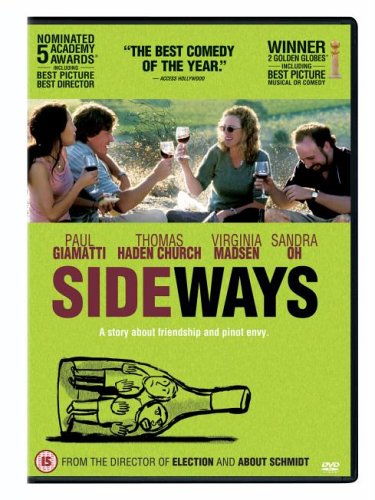
Ask and you shall receive. I love all that “manifestation” stuff that many new age books are full of, and its so worth believing in with, with so few down sides to believing in it that you might as well just believe in it.
They should have kept in the bit with the hillbilly boy who tries to scare them though, I loved that bit (maybe they filmed it, and its one of those “DVD extras – deleted scenes” that I’m too bored to watch).
Maybe I’ll watch the film again in a couple of years (hell I OWN it now) and enjoy it more.

This post is a little moan from my own professional world, but I think it has some wider implications for all sorts of organisations and reflects the status of cultural workers in the UK.
The British Film Institute has recently advertised for "Database Volunteers" - unpaid workers, "Salary: N/A," to add and correct data on the BFI's Film and TV Database .
This comes hot on the heels of the Institute's call for "postgraduate researchers who, as part of their studies, can view and catalogue holdings of important Channel 4 programmes held in the bfi National Film and Television Archive."There is an obvious benefit to all concerned for organisations to provide volunteer and internship opportunities, much experience and many contacts can be obtained by volunteers and interns - all of which will help them in their future careers. Collaboration with academic institutions, their staff and researchers can add value to an organisation's records and information that would otherwise be missed. However, should an organisation depend on unpaid labour to do some of its core work (to create and maintain accurate records)?
Using unpaid labour creates a situation where the volunteers subsidise the work of an organisation by taking on the cost of the work they do. They meet those real costs in the form of lost income, and having to arrange their lives to allow this "free" work to take place. The costs do not go away, they are merely outsourced.
Funding bodies, stakeholders and others, almost always ignore the contribution of unpaid workers when mapping the cost of running anorganisation against the results it achieves. Therefore the more an organisation uses unpaid labour the more necessary unpaid labour becomes to its existence. Attempts to obtain more funds to do the same work when volunteers leave are not generally met with success.
For those professionals doing the same or similar work in salaried positions, the use of unpaid labour can only lead to wage suppression and a reduction in both their professional standing and their perceived value to an organisation.
Publicly funded cultural organisations like the British Film Institute, and the many others in the UK working in a much more parlous situation must out of necessity try to achieve their aims against a background of limited funds. Imaginative solutions are always being called for, and all options must be considered.
But is this the way forward?

Yourmindfire is one of the contributors to Rubedo a new arts and cultural site.
Influenced by the alchemical concept of rubedo, the site brings together contributors from the worlds of poetry, music, film, astrology, psychosynthesis and other therapeutic disciplines.
The site currently features "What Red is Not" a meditation on the theme of rubedo and contemporary violence by the eminent English evolutionary astrologer Mark Jones, author of the seminal work "The Nature of the Pluto in Virgo Generation".

