Showing posts with label Permaculture. Show all posts

Friday, January 29, 2010

Diploma In Applied Permaculture Design


I've decided to return my energies towards completing the Permaculture Diploma. Last weekend I attended a Diploma Induction Weekend, facilitated by Graham Burnett and Hannah Thorogood. It was a good reminder session/space for those "what about?" questions/and gave some structure to what had been for me a pretty loose set up.

The next achievable (and important step) seems to be getting a regular Action Learning Guild going - I've created a new group for this purpose on the London Permaculture Ning.

Thursday, March 29, 2007

Wakey Wakey!!!

Been a bit slack here of late, but active offline. Attended the first "Transition City London" event on Tuesday this week at the LARC (London Action Resource Centre) in Whitechapel.

It's still hard to see how this would work on a city wide scale, especially in a city on the scale of London. A general feeling is that dividing the city by its boroughs would be an appropriate approach - which does split the city into more manageable sized units and works with rather than against pre-existing social and political structures. However London boroughs are also quite large units (too large?) and I wonder how identified Londoners are with their borough per se. Many Londoners live in one borough, work in another and perhaps socialise in one or more others... Well this is all stuff that needs to be worked through.

Meanwhile Transition Town Brixton is off the starting blocks, Sustainable Haringey is looking at Transition Culturing and if this stuff happens organically and from any grass roots level at all it's going to work much better.

Anyway here's some of the brainstorming over what a sustainable London might look like:


Excitingly there's also a UK wide tour of events "Wakey! Wakey!" trying to raise consciousness about Peak Energy just kicking off, learn more about it here.

ALSO: New FLICKR slide show of my photos in the sidebar ->
I've got other Permaculture related photos on the Naturewise FLICKR site.

Friday, January 05, 2007

A Day of Permacultural Fun


Anybody out there in the London area thinking about Permaculture, but feeling they need to know a little more about it before committing to an Intro course or full Design course? Then this may be the event for you:

A Day of Permacultural Fun

* Ever wondered about Permaculture?

* Wondering where to take your garden's design next?
* Want to be more involved in active sustainable solutions in your
neighbourhood?

Join us on the 13th Jan 2007 for introductions and celebrations from 2-5pm @
the Hornbeam Centre, 458 Hoe Street, E17 (nr Bakers Arms junction).
The cafe will be serving up South Korean vegan fayre, coffee and cake from 11-4

Regular weekly organic fruit and veg stall from 10-3pm selling wide range of
fresh produce and including seasonal specials.

2-3pm: Introduction to permaculture. Designing for people, communities and
the environment. Find out about weekend courses in North London - guaranteed
to make you view problems and solutions differently.

3-4pm: Video showing 'The Power of Communities'. Your chance to see this
inspirational video documenting Cuba's experience of Peak Oil and
trasformation to a low-energy society. Followed by short discussion about
local opportunities for action.

4-5pm: Exclusive 'book launch'- Earth Writings by Graham Burnett. 3 decades
of 'earth right' articles and artwork from punk to permaculture - with
readings and discussion.


Brought to you by:
Organiclea Community Growers www.organiclea.org.uk
Naturewise www.naturewise.org.uk
Spiralseed www.spiralseed.co.uk

for more info contact 07786657713

Thursday, December 14, 2006

Together in Electric Dreams

If we accept that we face a future of energy descent, and/or that our current profligate use of energy is contributing to global climate change (and I think we accept both right?) then we must use less energy.

Using less - and ideas of reduction can be unappealing and hard ideas to sell. Most of us, even those of us who accept a need to use less energy would prefer to keep as many of the benefits of modern convenience as we can. Therefore we want to find the most efficient ways of doing things while minimising any increase in the intensity of labour. So, given that we already turn everything off at the wall when we’re not using it, never use standby, have replaced our light bulbs with leds - what else might we do to bring our electricity demand down?

Washing your clothes

Rob Hopkins pointed out recently in an entry at Transition Culture the great advantages which the washing machine has brought. The labour of hand washing is certainly a real grind which most people would be pleased to avoid. So what can we do to make things better?

1) If you buy a new washing machine you must go for an A+ energy rated one – and use a full load.

2) Sharing a washing machine can be more efficient, especially using the industrial models found in launderettes – in the future it would be good to see installation of these type of machines in communal areas of housing.

3) You could try using an electricity free model like the Wonder Wash, which depends on your physical labour but increases its efficiency. I have no experience of these yet, but this seems worthy of investigation. In the UK you can buy them from here.

Drying your clothes

Now you’ve washed your clothes – they’re wet and you’ve got to get them dry. Lots of people use a tumble dryer – its easy, its independent of weather conditions, it also uses a lot of energy. So what are the options?

1) A clothes line obviously – but in the cool, wet temperate regions of northern Europe in winter time, this is not always a go-er. I recently read about this clothes line contraption, which if you’ve got the space may provide a solution to getting things dry even when it’s raining.

2) A spin dryer is a good way of extracting a lot of the water from your washing, and use far less energy than a tumble dryer. It uses centrifugal force to extract the water. This is supposed to be a resilient model. As others have pointed out, there should be a way of fixing something like this up to a static bicycle, thus using human generated rather than electrically generated kinetic energy and providing an exercise opportunity to boot.

Keeping food and drink cool

This is obviously more of an issue in warmer climes and the warmer months, but there are plenty of items which will keep longer, keep fresher or just be more appealing if we can keep them cooler.

1) In a climate like the UK, there is much to be said for the traditional larder – on the cool side of the house, allowing air to circulate around the foodstuffs can obviate the need for a fridge for much of the year.

2) There are some “high tech” developments taking place using magnets to create a more energy efficient refrigerator, these are still in development however and I prefer the lowest tech solution we can come up with.

3) Which brings into play the Zeer pot or pot-in-pot ‘fridge’, a beautifully simple use of thermodynamics and basic materials – two terracotta pots, sand, water – to achieve a way of keeping food and drink cool.

Making a cup of tea


Anyone who has looked at the wattage of the average kettle, or watched their electricity meter spin while their kettle boils will know how much energy these use up.

1) One thing I’ve enjoyed the use of recently is the storm kettle; this provides a quick way of boiling water using a small amount of combustible fuel. May mean you have to go outside to boil the kettle – but hey what’s wrong with outside?

OK, so now you can wash and dry your clothes, keep food cool and make a cup of tea all without using electricity. What’s next?

Friday, December 08, 2006

The Whole of our Efforts

I got into an interesting debate this week in the comments section of Transition Culture. Rob posted a short entry on Wednesday titled “The Idiocy of Renewing Trident” where he reflects on how the £20 billion being pledged for renewal of the Trident nuclear missile system could be better spent on energy descent preparations.

Jason Cole writing in response to Rob’s piece presents his belief that altering the UK’s policy in regards to nuclear weapons would be extremely difficult if not impossible. In the subsequent exchange between Jason and myself, he indicates that the issues of Peak Oil and Climate Change are where we should be directing the “whole of our efforts”, and that campaigning simultaneously for issues like nuclear disarmament is “pointless” and a “distraction”. I believe Jason means that these other issues will distract people from focussing on the most important issues, he also says: “speeches made about Nuclear Weapons during a Climate Change march only serves to dilute the message”.

In the course of the exchange between Jason and myself I argued both that these issues were intertwined and that it was worthwhile campaigning for nuclear disarmament, that we could effect change in this area.

I do believe that Jason’s position is one that we must consider however. Should we just focus on the most important issues to the exclusion of all others, however worthy? We have limited amounts of personal energy – how can we best use that to effect change? Should we be using some kind of personal EROEI equation, where we consider the ‘energy return’ as positive change effected in the system? – on this basis we only would only campaign on the issues where we could effect most change.

This could be related to the idea I first encountered in Permaculture of your personal ‘circle of influence’ and your ‘circle of concern’ (I believe that this idea originates from Stephen R. Covey’s book 'The 7 Habits of Highly Effective People'). Covey writes:

"In looking at ways to influence and change our surroundings it is helpful to notice where we focus our time and energy. We each have a wide range of concerns--our health, our family, problems at work, the national debt, etc., and it is these things in our lives that make up our Circle of Concern.”

“As we look at those things within our Circle of Concern, it becomes apparent that there are some things over which we have no real control and others that we can do something about. We could identify those concerns in the latter group by circumscribing them in a smaller Circle of Influence.”

Covey continues that effective people focus on their Circle of Influence because they “are smart, they are value driven, they read reality, and they know what's needed” and because “[t]hey work on the things they can do something about”. By focusing their energies in this way “The nature of their energy is positive, enlarging, and magnifying, causing their Circle of Influence to increase.”

When we consider these big issues which concern us like Peak Oil, Climate Change, Nuclear Weapons we are liable initially to feel dwarfed by their enormity. However, when we consider what we can influence and act on that we empower ourselves. It may be easier to see how our circle of influence could include elements related to Peak Oil and Climate Change – we can reduce our personal energy use in a number of ways, we can inform ourselves about the issues, we can shop locally, we can learn how to live more sustainable lives. It may be harder to see how our circle of influence extends to nuclear disarmament, and many like Jason might suggest it does not. Here however are some examples of what you might do:

1) Sign the E-Petition at the 10 Downing Street website:

We the undersigned petition the Prime Minister to champion the Nuclear Non-Proliferation Treaty, by not replacing the Trident nuclear weapons system.”

This is one of the most popular e-petitions on the site and has 5,300 signatories to date.

2) Join the Big Trident Debate pressing the government for a full debate on the issue of replacing the Trident system by adding your name to the Big Trident Debate Statement.

3) Contact your MP and express your opinion on the issue, ask them to support the Alternative White Paper ‘Safer Britain, Safer World: The decision not to replace Trident’.

4) Join the Campaign for Nuclear Disarmament

5) If you feeling active join the blockade of the Atomic Weapons Establishment at Aldermaston next Monday (11th December).

Wednesday, December 06, 2006

Climate Breakdown


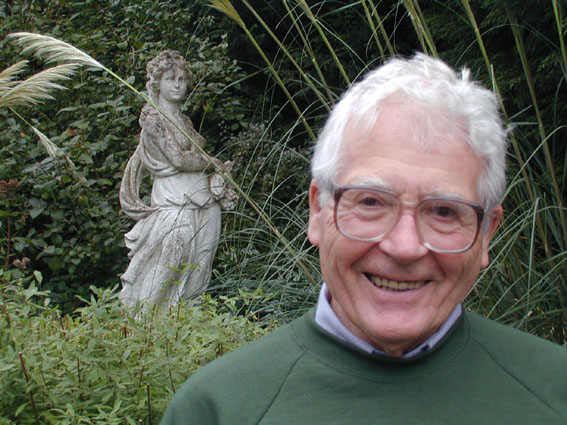
Yesterday I went to an event to a public discussion ‘Climate Breakdown: Can it Be Controlled? Can We Prevent it?” arranged by the Pugwash Group. Pugwash is an international movement of scientists and others with a professional concern about the social impact of science and seeking ways to prevent its misuse (They are named after the site of their first meeting the village of Pugwash in Nova Scotia, and sadly have no connection to Captain Pugwash).

There were three speakers: Sir Crispin Tickell; Professor Peter Cox; and, (the big draw for me as well as other celeb spotters of the science world I suspect) Dr James Lovelock.

Lovelock spoke first on the theme ‘Global Heating: a hazard comparable to, or greater than, nuclear warfare’. I am pretty aware of Lovelock’s recent doomy prognostications despite not having read The Revenge of Gaia, nevertheless it was still quite sobering to hear what he openly described as his “apocalyptic view”.

He predicts that global warming (or global heating, as he pointedly referred to it throughout) will cause droughts, storms and floods that will make most of the world uninhabitable for humans. The resulting planet will “support only a remnant of current population” and they will be “driven to the Arctic”, “island refuges like the UK, New Zealand and Japan” and a “few continental oases” while the rest of the world becomes a “hot and barren desert”.

Lovelock believes that we must accept our limitations and realise that we are not qualified to become “climate regulators”, that it is “hubris” to think we can act as stewards or sustainable developers. International Agencies are not up to the task of dealing with the issue of global climate change and we must make efforts to “save ourselves” and make a proper managed retreat to the Arctic basin, island refuges and continental oases or else face the inevitable rout.

The other two speakers did not challenge Lovelock’s opinion, and one gathered that while he is at the extreme of current thinking – he is within current thinking. He may be using the most extreme modelling, but he is using modelling coming out of serious climate science.

Professor Peter Cox spoke on the theme ‘Climate change science: knowns and unknowns’ and provided a useful round-up of the certainties of contemporary climate science, the basis on which we make further extrapolations into the unknown. This was also pretty sobering stuff in itself, even when you’ve heard much of it before:

  • Global mean temperature has increased by 0.7 degrees C since the late 19th century. Most of this rise has occurred since 1980.
  • The ten warmest years on record have occurred since 1990. 6 of the 7 warmest have occurred since 2000.
  • No natural factors can explain the post 1980 warming. The warming is however consistent with anthropogenic effects.
  • Tropical cyclones have increased in destructiveness over the last 30 years.
  • A global rise in temperature of around 1.5 degrees C by 2030-2040 is now inevitable. Nothing we do now can stop that, decisions we make now will however decide the amount of temperature rise faced by future generations.
  • Future modelling scenarios show that by 2100 warming will be between 2 degrees C and 5 degrees C.
  • Realisation of many of the models, up to and including the one indicating a 5 degree C rise, would result in the total melt of the Greenland ice shelf and the concomitant sea level rise.
  • The change in climate we are looking at is on the scale of the change between a glacial and interglacial period, but will happen 10 to 100 times faster.

The third speaker Sir Crispin Tickell spoke on ‘The Political and diplomatic hazards’, I have to admit I was a little tired by this point, but he did seem a bit dull and to spend a lot of time name dropping all the famous politicians he’d spoken with and foreign places he’d been. The most interesting parts were his description of Mrs Thatcher as an “eco hero”, and his musings on discussions between China and India regarding glacial ice melt in the Himalayas, changes in monsoon pattern, and sea level rise – all of which will impact both countries massively. In order for real change to occur, Tickell suggested we needed 3 things:

  • Leadership from above.
  • Pressure from below.
  • A ‘benign’ catastrophe, which would prove cause and effect.


He hoped that those in the room would not be affected by the ‘benign’ catastrophe (I wonder how ‘benign’ a catastrophe he was considering). I used to think that a US based climate related catastrophe was the necessary tipping point in global consciousness, but how much has Katrina changed in the States?

I couldn’t stay for the discussion/question session unfortunately so I can’t report on that. I imagine that Lovelock’s support for nuclear would have come up. He did mention nuclear in his presentation, in a slightly contradictory sequence in which he suggested that the USA would respond to climate change with attempts at “techno-fixes” to buy time like sun shades in space or stratospheric particles. These, he said, would be attempts to carry on a business as usual model and wouldn't really be much help. He went straight on from this to promote the role of science and engineering in buying time for the habitability of the Earth and allowing civilization to continue – presenting nuclear energy as a techno-fix.

One thing I hope would have come up is the whole question of economic growth. There did seem to be an underlying belief amongst the speakers that “economic growth” should continue but within a low-carbon society. I think that this unspoken paradigm needed to be brought out in the open and discussed. Tickell did mention in passing that established models of GDP and GNP were misleading, that ‘externalities’ were ignored, and that we needed to think differently about economics, that the teaching of economics should be altered to reflect the global reality. He stopped short of saying what should take the place of what he thought should be removed however – hopefully this came up at question time.

So, all in all, a slightly depressing if informative experience. The solution part of the discussion was limited to Lovelock’s nuclear buy-time techno-fix, Cox’s get business on board with a 30 year business case model, and Tickell’s asides about a low-carbon society. Lovelock’s attitude regarding the ‘hubris’ of trying to act as stewards of the Earth, seemed to tar techno-fixers (Brown Tech and Green Tech in David Holmgren’s terms) and techniques for Earth recovery like Permaculture (Earth Steward-ship in Holmgren’s terms) with the same brush. To the questions the discussion title posed – can climate breakdown be controlled, and can we prevent it? I think the answers to both were “not really, but we may be able to slow things down”.

Never has the need for action been so pressing as now. Do what you can.

Tuesday, December 05, 2006

Playing the Margins

"If the economy, and your place within it, is really important to you, you will be really hurt when it goes away. You can cultivate an attitude of studied indifference, but it has to be more than just a conceit. You have to develop the lifestyle and the habits and the physical stamina to back it up. It takes a lot of creativity and effort to put together a fulfilling existence on the margins of society. After the collapse, these margins may turn out to be some of the best places to live."

Dimitri Orlov, Closing the 'Collapse Gap': the USSR was better prepared for peak oil than the US

I just read Dimitri Orlov's latest piece, which I've quoted from above, on Energy Bulletin and found many interesting and amusing elements to it. I must say that Rob Hopkin's excellent recent entry on peak oil and scared men 'Is Peak Oil Pessimism a Generation of Men Coming to Realise How Useless They Are?' came to mind fairly often. The paragraph above however sparked off some more thoughts about margins.

One of the interesting applications of ecology in permaculture is the phenomena known as the “edge effect”. The "edge effect" is found at the boundaries of two ecological systems where there is more synergism, biological activity, and variations in the microenvironment and which can be used to increase yields in designed systems.

Basically where two (or more) ecosystems meet, say where a field meets a forest you find an increase in biodiversity. There are flora and fauna which inhabit from both of the meeting ecosystems and also unique flora and fauna which prefer that graduated space between. The meeting edges of ecosystems (sometimes called the ecotone) are therefore often highly productive.


Permaculturists will try to increase the amount of edge in a designed system in order to benefit from this boosted productivity in the ecotone. Techniques for achieving this include making boundaries between areas wavy rather than straight (increasing surface edge), making ponds in irregular shapes or using chinampas.

An interesting extension of the idea of the edge effect has been to lift it out of the physical space in which it is usually discussed into a metaphorical usage. For example some people suggest that it also points to permaculture ideas as being “at the edge" of a change in the push towards a sustainable future. Graham Burnett in Permaculture a Beginners Guide also refers to the importance of marginal or marginalised people, “alternatives” of all persuasion and people

neglected, disenfranchised, discriminated against because of race, religion, sexuality, poverty etc. because they’re single mothers, old, teenagers etc.


Rob Hopkin's comments on the lack of women represented in discussions about peak oil and energy descent, and recent comments by others highlighting the lack of non-white voices in these debates indicate that there is still much work to be done in valuing the "marginal". Gender and race are the most simple examples of how 'difference' can be marginalised. All of this seems to me, to point towards the importance of 'people care' in Permaculture and of social engagement - of recognising what's going on in our local area socially as well as environmentally, and seeing how we might best serve that situation.

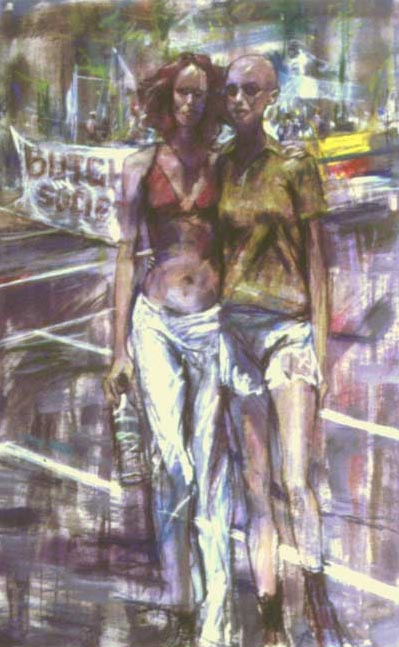
IMAGES: Slide 27 from Dimitri Orlov's 'Closing the Collapse Gap', J.Doe (1988) and Lesbian Couple (1988) by Len Steckler.


Monday, December 04, 2006

Naturewise Permaculture Introduction Courses


I know I posted only the other day about Naturewise Permaculture courses, but Nicole has just forwarded the Flyer for the Intro courses in an electronic form, so it seemed worthwhile to post again.


Dates and Venues: Introductory weekends: Holland Park, 27/28 January; Hornsey Rise 31 March/1April, 28/29 April, 26/27 May, 30 June/1 July, 25/26 August.

Full accredited Permaculture Design Course;

7 alternate weekends, starting 1/2 September 2007.

Fees: Negotiable and flexible, depending on income. Minimum fee £20/weekend, full fee £100/weekend

Contact: for more information, contact Nicole

on 08454582871 or samsara1964@hotmail.com

or visit our website; www.naturewise.org.uk

Polycultures, Rockets Stoves and Plot 21

I went down the Naturewise Allotment - Plot 21, @ Alexandra Palace on Sunday. Thankfully despite predictions it was a clear day, unlike the rainy mudfest of my previous visit.

Niels Corfield was visiting Plot 21 to talk about polycultures, and he also did a bit of practical tree pruning tuition for those of us there. Niels has a yahoo group Polyculture People for sharing and spreading knowledge about polyculture, his de.licio.us page entrailer has further links to polyculture sites and a whole bunch of other interesting pages for those interested in Permaculture. Toby Hemmenway’s book Gaia’s Garden has some good home scale examples of polyculture planting.

In the evening Niels talked about rocket stoves and other wood burning variants. He had a couple of video clips from Aprovecho Research Center an Oregon, USA based organisation that are engaged in research into appropriate technologies. On their site you can view/download their films on Charcoal Burning Rocket Stoves and building a VITA stove. Unfortunately the wonderfully camp video on making a stove in an old olive oil can Niels showed us is not yet available, although apparently will make it on to Google video soon. Niels also had a copy of Ianto Evans et al.’s book Rocket Mass Heaters: Superefficient Woodstoves YOU Can Build, which had more glorious pictures of Cob Building in it (the book has its own website from which you can download a pdf copy for the very reasonable $10 (especially if you are outside the USA and benefiting from the falling dollar).

Monday, November 27, 2006

Design for sustainable Living - Now!

This weekend I completed my Permaculture Design Course, a fantastic experience. I met some really great people – those teaching on the course, people we met on various visits (including OrganicLea, Growing Communities, Wholewoods, Soteriologic) and those fellow travellers attending. I’d like to send out a big thank you to everybody, many new friendships have been formed over the last few weeks, and long may they continue.

I did the course with Naturewise in North London, and I highly recommend them. They are running more courses in 2007:


Introductory Weekends:

"provide a taste of what permaculture has to offer you and others both in theory and practice"

Holland Park 27/28 January

Hornsey Rise 31 March/1 April

Hornsey Rise 28/29 April

Hornsey Rise 26/27 May

Hornsey Rise 30 June/1 July

Hornsey Rise 25/26 August


Full Accredited Permaculture Design Course:

7 alternate weekends starting 1/2 September 2007


I feel that the alternate weekend approach is much more successful than the "2 weeks away" approach which is how many other PDC courses run. It is certainly easier to fit into working life, but it also provides time for reflection and for ideas to bed down, for new queries and confusions to be raised and answered.

For more information and to book places you should contact the wonderful Nicole:

08454582871 or samsara1964 [at] hotmail [dot] com.

Also you can check the Naturewise site to get a better sense of activities and the Naturewise vision.

Thursday, November 23, 2006

Life in the Round

Hot on the heels of my talk about “inhabited geometry” it was great to see these pictures of Tony Wrench’s roundhouse at Brithdir Mawr, which the ever alert Keith alerted me to. They are part of a series on housing and ways of life in the UK, so make a synchronous follow on from my recent musings.

Keith, Helen and I are were privileged to meet Tony and visit his roundhouse early this year during our Permaculture Introductory Course with Angie Polkey. I didn’t notice it until we were about 6 feet away, so take it from me – it blends in with its surroundings!

The photos on the BBC site are great and really communicate something of the magic of the place, they certainly bring back good memories.

Tony is involved with the Lammas project which intends to create a safe, low-impact settlement in West Wales. The alternative media outlet Undercurrents have been following developments at Lammas, and you can see video coverage of how things are going with the Ecovillage on their site. The footage is planned to reappear in a DVD launched next year called Living in the Future, about self builders and eco-villagers.

Tuesday, October 31, 2006

Round 'em Up


Roundup of stuff time, Rob Hopkins has also posted about David Suzuki over at Transition Culture and made some interesting comments as ever, well worth a read.

An unexpected guest speaker at my permaculture course this weekend was Donnachadh McCarthy , author of Saving the Planet Without Costing the Earth. He had a lot of interesting things to say. A couple of little practical ones:

1) lots of people I know have avoided getting eco-light bulbs because they don’t work with dimmer switches, well now there are some that do – made by Megaman and available through a number of retailers, another course attendee recommends lamps2udirect (thank Geralyn!).

2) Seems that there’s an increasing body of evidence of very low outputs from domestic wind turbines in urban settings. Donnachadh is a pro-renewables voice, and has his own turbine – so I think we can trust him on this. This is particularly concerning given that B&Q are making the big push now with wind, perhaps while the technology is still in its infancy. While there is a good symbolic role in people taking on this technology, it could backfire terribly if lots of middle class people buy £1500 machines and get very little out of them except vibration damage to their roofs.


A note on Energy Bulletin directed me to this promo for the ASPO film Asleep in America on YouTube.


Tuesday, October 10, 2006

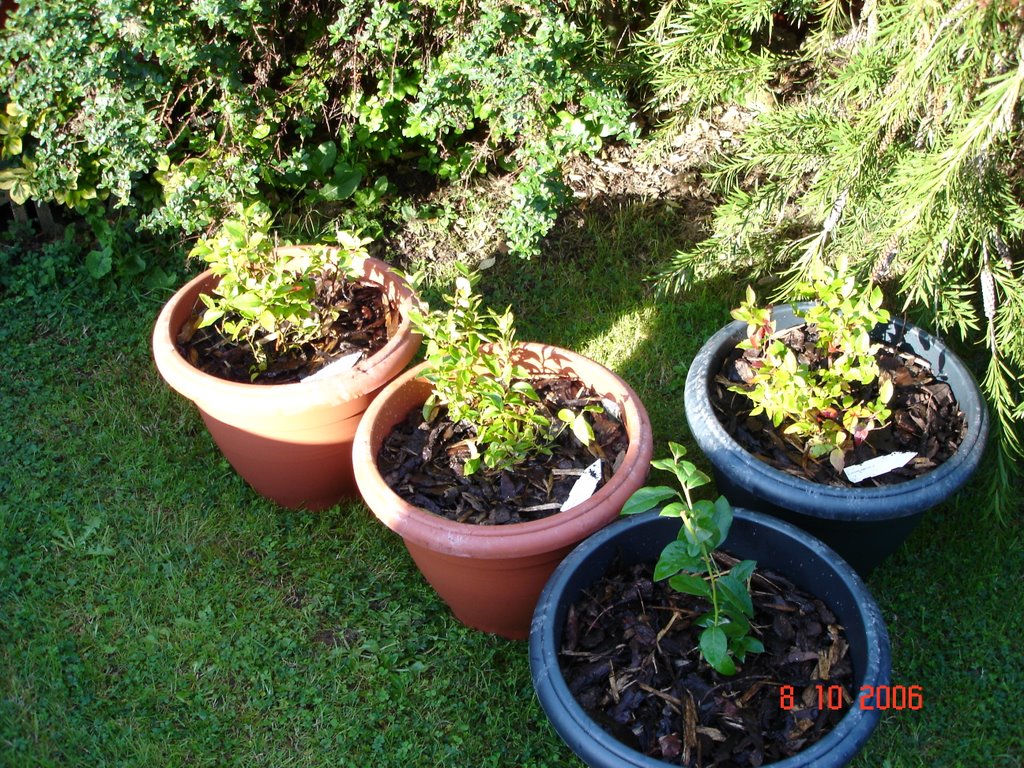
Blueberries

Blueberries

Planted up blueberries at the weekend, four plants, four different varieties: Chandler, Brigitta, Bluecrop and Early Crop.

They’re in containers for two reasons: 1) they’re ericaceous like me, and that’s easier to accommodate in pots; 2) it’s not my garden – so I’m limited in what I can do, and I guess this way I can take them with me when I go (without digging ‘em up).

You will notice the surface mulch of tree bark, beneath that there is a sheet layer of newspaper pages. I guess that’s about as far as I’ve got with this as any kind of ‘permaculture’ project. Although engagement with food production at all creates a shift in consciousness. It’s all organic too. But I fucked up with the compost and its got peat in it, which I didn’t really want – and how sustainable is it growing something that requires different soil conditions to what you’ve got anyway?

I chose to grow blueberries first, because I like blueberries – and I suppose they’re a ‘super-food’ if that means anything at all. I perhaps should have approached choosing plants from a sustainable point of view first – but I figured choosing something you don’t like is never going to be very sustainable is it? So let’s see how we get on with the blueberries.

Wednesday, May 10, 2006

Childish Things


Always a pleasure, never a chore. I think I read this one too quick though. Normally I wander in and out of an issue, sampling delights here and there over a period of weeks. But I was too up for it this time, I saw on the website it was out – I walked to Foyles, bought a copy, started reading it and ended up going straight from cover to cover in a couple of days of train journeys and bedside perusals. Bugger, six months to the next issue now probably. It really wasn’t very idle of me to read it so quickly, but I’m on a roll with the reading right now and nothing seems able to stop it.

This issue (37) is Childish Things, lots of pieces relating to education and childish experiences. If one thing got to me, I guess it was a hint of settled thirtysomething familydom hanging about the volume. Childless, and now single after the personally traumatic break up of an 8 and a half year relationship, mid thirties - staring down both barrels of the other 50% of my three score years and ten – the warmth of family given off by those more successful professionally, creatively and emotionally than myself was a bit too much. Somebody open a window. Wider. I’m going to throw up.

That was harsh and I didn’t really mean it, I don’t want to confuse my personal foul doomy mood with the actual buzz of the book (magazine? Journal?). Then again, it’s my experience and I can’t have any other…..

Best bits, this time around: Billy Childish’s manifesto; the idling extracts from The Meaning of Tingo, Mark White’s piece on Kenko (no, not the coffee – the Japanese author) and the stuff on Summerhill.

I looked forward to another Graham Burnett piece on permaculture, but it turned out to be the same thing he had published in the last issue of the Permaculture Magazine, which was a bit disappointing.

Oh, the Michael Palin interview was good as well, but you felt only really touched the surface of what could have been a long and revealing chat about what the man thought. Have you see that Palin's just about to film a new travel series? This one's about the 'new Europe', basically the eastern bloc countries about to enter the EU I believe. Not going to be broadcast until Autumn 2007, so do not hold your breath. Doesn't sound as exciting as Himalaya though does it? That one's going to be hard to beat. Maybe Palin's Inferno would be a more ambitious next step, or Palin does the Astral Plane. Well, maybe in the next world heh?