Showing posts with label Architecture. Show all posts

Thursday, February 22, 2007

Slumming It

"The city is our ark in which we might survive the environmental turmoil of the next century. Genuinely urban cities are the most environmentally efficient form of existing with nature that we possess because they can substitute public luxury for private or household consumption. They can square the circle between environmental sustainability and a decent standard of living. I mean, however big your library is or vast your swimming pool, it'll never be the same as the New York Public Library or a great public pool. No mansion, no San Simeon, will ever be the equivalent of Central Park or Broadway."

Mile Davis interviewed by Tom Engelhardt in “Tomdispatch Interview: Mike Davis, Green Zones and Slum Cities


On Monday evening I went over to RIBA (the Royal Institute of British Architects) to see a talk by Mike Davis, the American cultural historian, political activist, social commentator etc. (you may remember me linking to his piece on Dubai in a post last year). Davis is in London all week doing a series of events on different subjects ranging from the future of the “New Left” to his new book: Buda’s Wagon: A Brief. History of the Car bomb.

The RIBA event was billed in different places as being about “Architecture and Climate Change” or his earlier book Planet of Slums. I was happy to hear about either, and it actually turned out to be about both and about much more. The issue of climate change was neatly folded back on to and revealed in the light of the economic hegemony of neo-liberal globalisation.

Having become pretty disillusioned with “leftist” politics and generally feeling that, while the intellectual analyses and critical techniques of Marxist and Socialist thought were still valuable, close association with these as part of a political programme was an ideological trap that kept us in a dualistic dead end – it was amazingly invigorating to be shaken about a bit by a serious hardcore mind from the Left.

The social and ecological strands met in an examination of the emerging “landscapes of inequality”, where resource depletion and climactic change are already causing the migrations and tensions over migration which many see as an unavoidable part of the global future. Davis focussed on the American South West, especially the US/Mexico borderlands – the area he is most familiar with – but also referred to the analogous spaces of the Mediterranean, and the near Middle East.

I went to the talk imagining that Davis would be outside the energy descent sphere and that I would be taking what he said and doing my own mental associations and analysis to assimilate what I learnt there with what I’m learning from elsewhere. It quickly became apparent that I wouldn’t be required to make the connections alone – “peak oil” and “peak water” rolled off Davis’ tongue with familiarity, he referred to suburbanisation and Kunstler, he could see what was coming.

When it came to the environmental issues, Davis reinforced what I’m increasingly learning: that the necessity for consensus in the IPCC report, and the lead in time on the data it is produced from mean that it reflects a “moderate” view far from the beliefs and predictions of many serious and significant climate analysts, and that new information is already radically reshaping our view of what might be currently occurring. Most significant is the rising body of opinion and data indicating rapid melting of the Greenland and Antarctic ice shelves, concomitant sea level rises, the passing of several significant tipping points, and the possibility that, as Lovelock suggests, the Earth is adjusting to a new hot state – that we could be seeing the end of the Holocene.

After years of it being on my list of “to reads”, Davis’ compelling prose style has finally led to me picking up his “LA book” City of Quartz, which is excellent and I think that pretty much everything else he has written is going to have to follow… One thing I am especially interested in following up on, is encapsulated in the quote at the top of the entry. A lot of my current thoughts are about the possibility of Transition Cities - a scaled up version of the Transition Town idea. My gut feeling was that a city the size of London (let alone one the size of Bombay or Karachi say) could not effectively and sustainably function in a state of energy descent. Recent conversations and other inputs (not least Stewart Brand's "City Planet" lecture at the Long Now Foundation) have encouraged me to re-examine this supposition. I will return to this issue as my ideas develop.

Thursday, November 23, 2006

Life in the Round

Hot on the heels of my talk about “inhabited geometry” it was great to see these pictures of Tony Wrench’s roundhouse at Brithdir Mawr, which the ever alert Keith alerted me to. They are part of a series on housing and ways of life in the UK, so make a synchronous follow on from my recent musings.

Keith, Helen and I are were privileged to meet Tony and visit his roundhouse early this year during our Permaculture Introductory Course with Angie Polkey. I didn’t notice it until we were about 6 feet away, so take it from me – it blends in with its surroundings!

The photos on the BBC site are great and really communicate something of the magic of the place, they certainly bring back good memories.

Tony is involved with the Lammas project which intends to create a safe, low-impact settlement in West Wales. The alternative media outlet Undercurrents have been following developments at Lammas, and you can see video coverage of how things are going with the Ecovillage on their site. The footage is planned to reappear in a DVD launched next year called Living in the Future, about self builders and eco-villagers.

Monday, November 20, 2006

SPAN, Lovely SPAN!

Last Thursday lunchtime, Rebecca and I visited the new exhibition at RIBA (Royal Institute of British Architects).

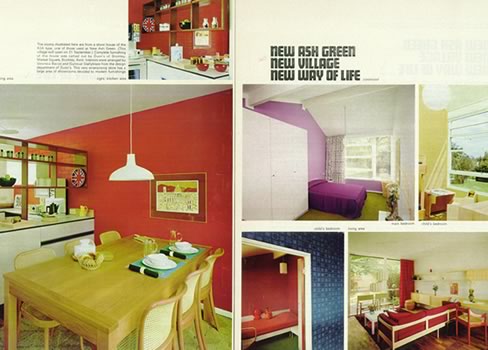
The small exhibition is on the work of the architect Eric Lyons and his SPAN housing. Lyons wanted to integrate the natural environment, housing and communal spaces - in a vision of what we would now call 'sustainability'.

According to a news item on the exhibition from the BBC website:

"He placed three basic principles at the heart of the Span projects:

• community as the goal

• shared landscape as the means, and

• modern, controlled design as the expression. "

That said, he was heavily influenced by Walter Gropius and modernist design - so this is not a cob or strawbale vision of the future - and many elements of his work are not particularly sustainable (though no less than the base level of most modern buildings I'd wager).

There was a symposium at RIBA on Saturday: 'Developing Span: Models for Arcadian futures?' – unfortunately I could not attend.

I personally quite like Lyons’s work, and aesthetically it appeals to the modernist end of my taste. Rebecca and I both noted that there was probably also a nostalgic element to this, as the building style reminded us of our youth in the 1970s ( I have a penchant for the colour orange for similiar reasons). The exhibition is totally gratis, so if you're in London, and at a loose end, as I frequently am, I recommend easing your ennui with a visit (it's on until xmas).

For those outside London, or too weary to venture in to the city (I don’t blame you) - there's a website on the village built to his design in Kent, New Ash Green.

I find that there is a human quality to this building style which is missing from most of our contemporary housing – and this despite the fact that they remain a series of boxes – not the more curvaceous shapes that appeal to my imagination.

I think that it is something to do with proportionality, the rooms feel ‘right’, in that they all appear to have a pleasing ratio of height, length and width (which may well have more to do the Fibonacci series than Feng Shui) that allow them to override the industrial nature of right-angled construction.

The curvaceous shapes of my imagination however, as manifest in cob housing or Roger Dean’s ‘Home for Life’ manifest instead the non-Cartesian architecture that Gaston Bachelard proselytised for in The Poetics of Space. Cob houses especially, in my experience, have what Bachelard called “inhabited geometry” allowing the “tonalization of being”.

Which of these styles, if either, represents the best future for building in the UK, or indeed the world? Corporate, business as usual construction, will –when placed under pressure for greater sustainability - no doubt prefer what David Holmgren calls the “green tech stability” route. This will mean, remaining in the established paradigm as long as possible, bending it in order to accommodate statutory or socially necessitated ecological requirements. At this point some modelling based along SPAN lines may appeal – but this will probably both: not address the problems inherent in SPAN buildings; nor, make the effort to reflect the human spatialization of SPAN proportions, instead following a scarcity model, maximising financial return on a site. As has so frequently been the case, the dreams of modernism will easily dissipate in the morning of quotidian drudgery, leaving a fractured trauma for the populace.

IMAGES: Magazine spread on New Ash Green from Ideal Home (October 1967), Cover of Ideal Home (October 1967), SPAN publicity brochure (1967), Interior of prototype ‘Home for Life’ designed by Roger Dean, Rainbow Ranch, Buda Texas – cob house built by the Cob Cottage Company, (1998).

Friday, November 10, 2006

Castles Made of Sand


As a long term fan of the airship, for their beauty and grace, their engagement with the ‘cruising’ element of travel – slow travel – if you will, I’m always pleased to hear about new developments promising their return to the skies.

While I’m waiting for a Hindenburg scale helium dirigible, with restaurants, state rooms, ballrooms etc. built using the best of modern knowledge and materials (see previous entry) – the flight of the more modest Spirit of Dubai over London this week is still inspiring.

The BBC Online story doesn’t shy away from energy descent future either, with Dick Chadburn, chairman of the Airship Association, and a former engineer manager at Shell quoted saying:

"In a world with very limited fossil fuels or restricted use of fossil fuels you have got to go back to the technology of your great grandfather - no cars, but bicycles. The airships could form part of that."

In light of this it’s intriguing that the Spirit of Dubai is travelling across Europe, Egypt and the Middle East (largely following the “all red air route” Alan Cobham mapped out for the 1930s British airships before the R101 disaster - and thence used by Imperial Airways) to Dubai.

It's advertising, en route, the “Palm Jumeirah”, Dubai's enormous development in the shape of a palm on land reclaimed from the sea. Dubai’s massive development of new skyscrapers, shopping malls, luxury hotels and villas has been motivated by the Kingdom’s realisation that it’s oil wealth is about to go into decline in the face of peaking fossil fuels. Dubai figures it can turn itself into a luxury tourist resort, site of second homes on fantasy islands and become a major city of the 21st Century getting new wealth from super-rich visitors (see Mike Davis' excellent article 'Fear and Money in Dubai' in the New Left Review on how Dubai is "Speer meets Disney on the shores of Araby").

What I’ve always wondered is – in this peak oil future of energy descent – how anyone is supposed to get to Dubai to enjoy this set-up(certainly in the numbers required to make it financially add up), let alone how they are going to run the a/c, elevators etc. Perhaps airships are part of the plan – but I can’t see that their thinking is that advanced (Emirate Airlines recently placed a $37 billion order for new airplanes from Boeing and Airbus). Anyway, international transport is going to be the last of their worries when there’s no artificial cooling of 120 degree Fahrenheit heat, and the desalination plants have no power to produce drinking water…

I imagine the whole place as castles in the sand, ruins of the (near) future being built now. Grander follies than the 6 storey towers the Anasazi nation abandoned, or even the empty buildings of Detroit photographed and discussed by Camilo Jose Vergara in American Ruins.

It’s a JG Ballard style urban dystopia in the making, and when I think about all those glass fronted tall buildings waiting for airborne travellers to descend and spend and save the place - then it reminds me of Jimi Hendrix too, singing:

"Look, a golden winged ship is passing my way"
And it really didn't have to stop...it just kept on going.
And so castles made of sand slips into the sea,

Eventually.


IMAGES: Spirit of Dubai over London, Dubai skyscrapers, abandoned Anasazi city, the abandoned Michigan Station in Detroit.

Friday, September 29, 2006

Who lives in a place like this?


James Howard Kunstler has a new essay up on his site called "A Reflection on Cities of the Future". While it offers little new information to those already familiar with Kunstler's work - I found it engaging personally as it made me revisit some of my own thoughts about buildings, urban planning and modernism in general.

I come from an intellectual tradition that privileges 'modernism' as an artistic highpoint in Western culture and perhaps the last cohesive moment before a descent into chaos. On the obverse to this, I percieve the culture of 'modernism' equating with the culture that produced the total wars and unsustainable economics of the Twentieth Century. I am also excited by the polymorphous play and freedom of the cultural moment that is post - 'modernism' (if not necessarily postmodernist). The issue is, for me - and I suspect many others, further problematised by an inherent sense that novelty is revolutionary, smashing old decadent traditions - and thus a largely unquestioned faith in an 'avant-garde' or cultural vanguard - leading to a preference for 'new' or 'modern' things that can easily and confusingly be considered a 'modernist' attitude.


You still with me? Now the built environment is an excellent locus for exploring one's feelings about the 'modern' and 'modernism' - because this is where these ideas can be seen to directly impinge on our existence. We can clearly see when ideas are realised in ways that are successful, and when they are not. 'Modernism' in architecture is revealed as a broad church that contains both high ideals and base forms.

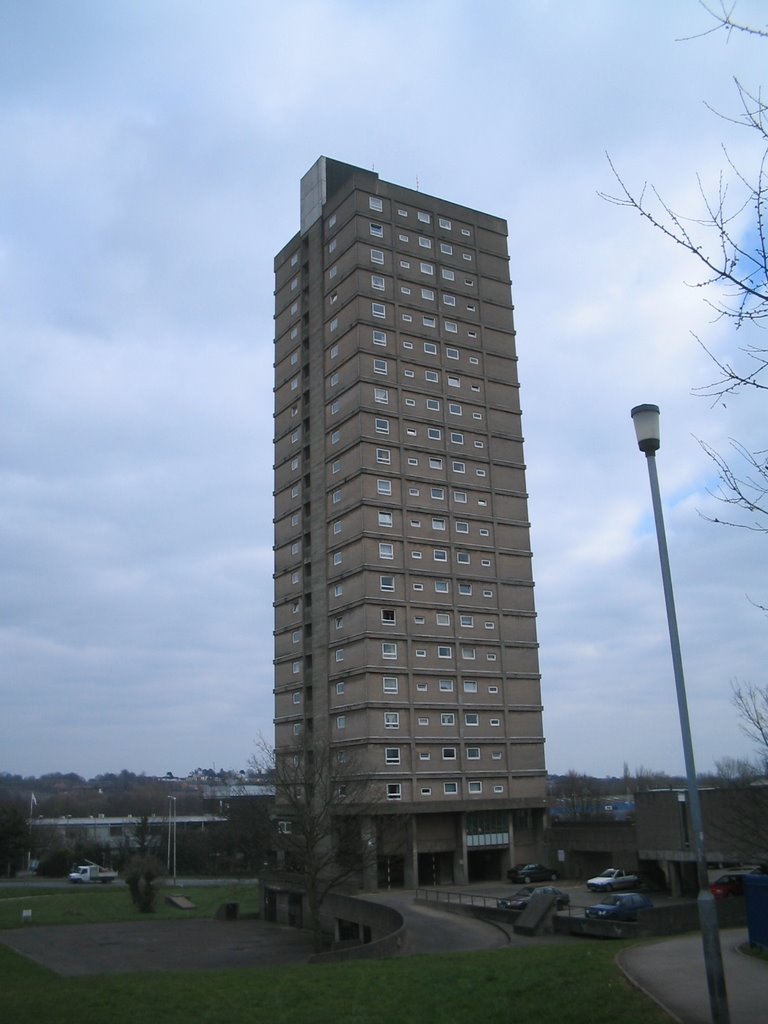
It is therefore not as simple as being pro or anti the 'modernist' vision, each example must be taken first on its own merits - and subsequent to this, we might draw more general conclusions. Do the 1930s skyscraper and the 1960s tower block have less in common or more in common than we first imagine? Can the obvious faults of an unsuccesful realisation provide us with an insight into unseen failings in apparently successful realisations - and vice versa? Can we learn from our mistakes?

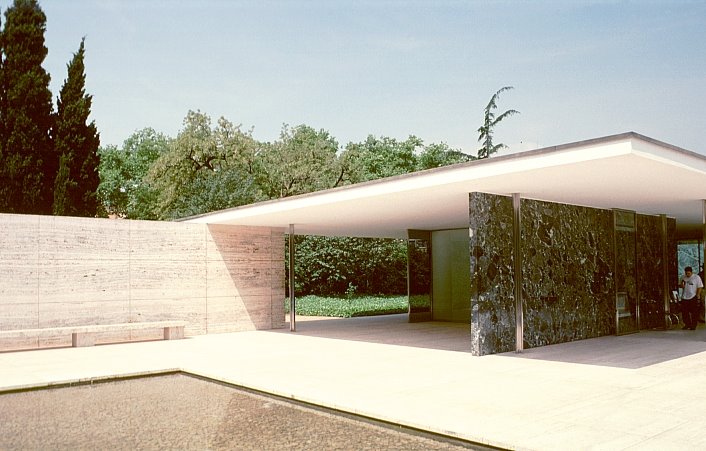
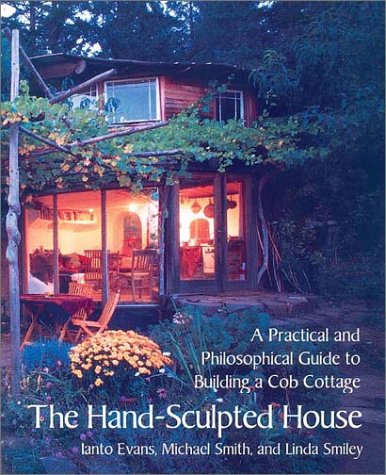
While part of me is caught up in the shiny surfaced sci-fi dream of the skyscraper, the cool lines glass, concrete and steel of empty cubes in minimal houses and apartments – another part is close to the earth, wrapped in a fantasy of organic architecture blending into the landscape, curvilinear and irregular natural materials. Is this the age old dichotomy - town & country, urban vs rural, nature versus culture, Narziss und Goldmund - is it anything to do with youth versus age, or are these too false distinctions? Why do the 'clean' lines of modernist architecture so often seem to require materials which are 'dirty' - polluting (cement/concrete), and environmentally destructive (all the quarried marbles etc.)? How futuristic is a building style that not only has no future, but may be partly responsible for destroying the future?


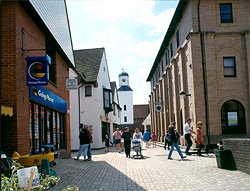
I really don’t know enough about the New Urbanist movement to make a decent comment on it. I’ve read some of what Kunstler has said about it, heard interviews with Richard Register – and it sounds like there are great ideas in there. But always at my back of my mind is the fear of how the best ideas can be debased. Just as the grand visions of modernism were too often transformed into cheap imitations that both failed to realise the modernist ambition at their root and were significantly worse than what they replaced. When I read or hear about the New Urbanist vision, two examples come to mind that seem to bear much resemblance to what is being talked about, and which I find personally distasteful. The first is where I grew up, and where I find myself residing again, South Woodham Ferrers in the county of Essex in the South East of the UK. This village become town which trebled in size while I was at school was extensively remodelled over that time to move from being merely a commuter dormitory town to somewhere with genuine community. This project (“South Woodham Ferrers – the Place to Be” - apparently) involved building an entirely new town centre from scratch – with town square, faux-medieval pedestrian shopping alleys, church, school, library, supermarket (complete with fake dovecote roof), pub (a new build made to appear to be an agricultural building converted into a pub – with old ploughs etc on the wall for “authenticity”) and later a bandstand in the town square. It was an abject failure, few shops manage to last very long, the land is owned by the superstore (Asda/WalMart) who control the rents and can thus easily destroy any competition, the civic space is largely un-used – except by bored youth, and even their recuperation of the space for graffiti, skateboarding, casual drug use, public drunkenness and fighting has been broken by the introduction of ominous CCTV mounted on gargantuan poles. The paved streets and squares are in disrepair.

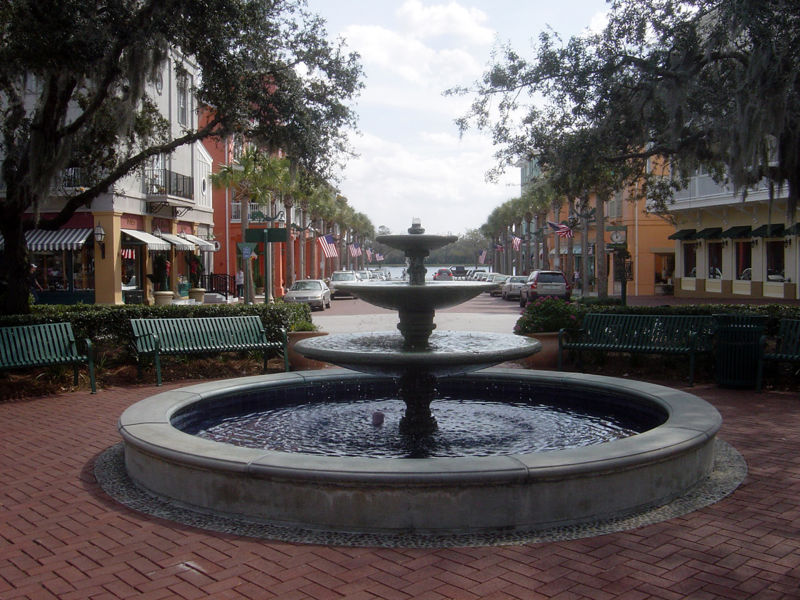
More successful on its own terms, but perhaps even more monitored is the second example – Celebration, Florida, the famed town built by the Walt Disney corporation – not as a theme park, but as a safe, pleasant place for middle class white people to live in a fantasy of the world before rampant capitalism destroyed true communities. This doesn't so much seem to be part of some cohesive vision of a sustainable future for our cities, and a way of rebuilding true communities - as much as a way for the privileged to externalise all the products of the existence they live which they don't like and purchase 'community' as just another commodity.


IMAGES: Chrysler Building in New York, USA (William Van Alen), Tudor Road Tower Block in Cwmbran, Wales, UK (unknown), Barcelona Pavilion in Barcelona, Spain (Mies Van Der Rohe), Cover of 'The Hand-Sculpted House' by Ianto Evans, Town Square: South Woodham Ferrers, Essex, UK, Town Square: Celebration, Florida, USA.