Showing posts with label Poetry. Show all posts

Friday, March 07, 2008

The Gift

The Gift

The gift
And the feeling behind the gift
The character of the giving
The process and action
Which presented this gift.

A dance around the question
Of selfishness
And selflessness
An attempt to act
In a way which is ‘Right’

To offer each action up
As some recompense
Or sacrifice
For my no doubt myriad other sins?
Failures to take it
To stand where I am
Speak what I think
Not lie
Nor circumvent
Look for easy paths
Short cuts
That avoid a necessary journey.

And in this search for ‘Rightness’
I sense a ghost
Of lost romance
Broken eros
Trying to reform as agape
Afraid of eros
Afraid of breaking.
In a woman
In Love
There was a bridge
out of an isolated sense of self
Love is the Magick
But now where does the bridge lead?

A kiss in the morning can be more dramatic than a drama by Mr. Fancypants

This assignment has led me to reflect on my creativity in a number of ways and also to consider the role that an artistic attitude and creative engagement might play in a human ecology perspective. I will explore this through personal narrative, thoughts around my poem The Gift (which itself reflects on creativity) and interaction with the texts of others.

Over the years I have engaged with creativity in a number of ways, and I remember how as a child I enjoyed the play of art making. Around the time of adolescence my relationship moved from being primarily a producer of creative activity to becoming a receiver and commentator. I studied literature for three years at university and later studied cinema for a year. In between I worked in the art school’s library surrounded by volumes of artistic expression and by creative artists themselves – painters, sculptors, weavers, and performance artists, artists exploring time, space and materials in a thousand different ways.

I had (have) friends who were (are) poets, painters, musicians and my brother makes his living designing clothes. I read and read, I have visited art galleries around the world, worked in cinema archives, maniacally bought and consumed recorded music, seen music performed live innumerable times. Through out much of this time I attended little to my own creativity. In many ways I was like the ‘shadow artist’ described in The Artist’s Way (Cameron, 1995) “Shadow artists often choose shadow careers-those close to the desired art, even parallel to it, but not the art itself”(p.27).

But I was not completely cut off from my own creativity – I wrote poetry, furtively, not for general consumption; and I scribbled, doodled, sketched on hundreds of pieces of scrap paper. I took photographs; I took a class in photography.

As I grew older, I became more confident in expressing myself in these ways – though that expression remained largely without an audience, and while I didn’t hide away what I did neither did I make any effort to share my output. I remained caught in a problematic conception of art and creativity. The need for me create and the value I felt in creativity was tempered by a perceived sense of the low value of my creative output.

I recently encountered the work of psychologist Guggenbühl-Craig on creativity and this formalised a lot of my only partly consciously thoughts. Guggenbühl-Craig divides the concept of creativity into three distinct manifestations, which he describes as: personal creativity, collective creativity and transcendent creativity.

He is dismissive of the first kind, writing that (Guggenbühl-Craig, 1995) “we should not refer to personal creativity as creativity at all”; we should in fact refer to it as “self-development, self-expression or something similar” (p.7). By collective creativity he meant the work of the advertising and fashion industries that attempt to follow and shape the zeitgeist. Finally, in transcendent creativity he identifies what we conventionally consider ‘high art’ – the work of ‘geniuses’ Shakespeare, Bach, Michelangelo etc.

For several years I had been dismissing my creativity as not really “creativity at all”, and thus of little value. I was in fact devaluing my self and my actions, looking back on this now it is easy to see both that this mirrored my sense of political agency and that many others seemed to be trapped by this same dynamic. In placing a low value on what I could personally achieve, and deferring value to others I was handing away my own power. I felt so dwarfed by the attempt to reach that transcendent creativity, the only art in which I was socialized to find value that I tended to not act at all. This is what Cameron (1995) describes as debilitating perfectionism “Part of the game here is lining up the masters and measuring our baby steps against their perfected craft” (p.121).

This inertia, the sense of being daunted by the scale of the task immediately resonates for me with my own and others’ feelings about global ecological problems and issues of social justice. I wondered if there might be support from artists and radical politics that might suggest routes out of this way of thinking.

Audre Lorde (1984) in a perfect challenge to Guggenbühl-Craig’s value division of creativity writes “yes, there is a hierarchy. There is a difference between painting a back fence and writing a poem, but only one of quantity. And there is, for me, no difference-between writing a good poem and moving into sunlight against the body of a woman I love” (p.58).

I found that the surrealists spoke of a ‘communism of genius’, and that the situationists made a revolutionary call for an ‘art made by all or not at all’ (Debord, 1957). Similar sentiments to Lorde’s were evident in the Fluxus movement (Higgins, 1984) “They said: "Hey! - coffee cups can be more beautiful than fancy sculptures. A kiss in the morning can be more dramatic than a drama by Mr. Fancypants "” (p.87).

The therapist Thomas Moore (1994) offered another take suggesting the association of creativity with “lofty fantasises of exceptional achievement’” (p.198) is a juvenile romanticization of the creative act. He suggests we bring our idea of creativity down to earth and realise the role of creativity in our everyday lives. He proposes that human creativity is “a participation in the act of God creating the cosmos”, but this lofty claim is rooted in quotidian practice “As we do our daily work, make our homes and marriages, raise our children, and fabricate a culture, we are all being creative” (p.199).

The artist Joseph Beuys formulated an idea of artistic practice he called ‘Social Sculpture’, in which all humans are seen as ‘artists’ responsible for the shaping of a democratic and sustainable social order. He wrote that we are all, everyday working with “invisible materials”:

Thinking Forms - how we mould our thoughts or

Spoken Forms - how we shape our thoughts into words or

SOCIAL SCULPTURE - how we mould and shape the world in which we live:
Sculpture as an evolutionary process; everyone an artist.
(Harlan, 2004)(p.9).

These ideas are all rich to me, fertile with possibilities of how I might live life and how creative practice might play a role in social engagement.


To thine own self be true

As I was considering the creative element of this assignment I was reading Lewis Hyde’s The Gift: How the Creative Spirit Transforms the World. In this book Hyde (2006) makes the case that “the art that matters to us – which moves the heart or revives the soul, or delights the senses, or offers courage for living, however we choose to describe the experience – that work is received by us as a gift is received” (p.xiv). In considering the transactions of art as gift exchanges he writes of other gift economies – a modern one referred to by sociologists is blood donation (Titmuss, 1971).

While I pondered creativity and what this gift quality might mean, I also thought on the importance of these convivial actions that form a sense of world. So I made an appointment and a few weeks ago I donated blood. The session took place in Conway Hall a “hub for free speech and progressive thought” (Anon. 2007).

I took a place on a bed and a phlebotomist examined my left arm. Unable to find a vein, she said she would need to try my other arm and had me turn about head to tail. She quickly found a vein on my right arm but it was close to the surface, it would likely bruise she said, but this might elicit sympathy for me. Calling a colleague over, they considered another vein – one that was deeper, less accessible, reaching which might cause more discomfort.

They successfully punctured it and left me reclining, right hand gripping and releasing to act as a pump – hand become another heart at the extremity of my arm. Now, as I had been turned about, I faced the stage of the main hall and I found myself staring directly at a legend painted upon the proscenium arch:

“TO THINE OWN SELF BE TRUE”

It was the only thing available to read for the 10 minutes of the session, and filled my attention. I remembered it being from Shakespeare’s Hamlet, Polonius’s advice to Laertes. In this period of contemplation two words stood out from the others: “SELF” and “TRUE”. The Human Ecology course has led me to consider anew questions of identity, and my recent reading and thoughts have constellated about ideas of the transpersonal. These ideas have challenged me to think about where my sense of self begins and ends, to consider an expanded sense of self. Now this line also challenged me, forcing me to ask: what I considered “self”, what constituted my “own self” and what was/is “true” to that self? How could I be true to an expanded sense of self? In any creative expression how could I speak truly?

In The Artist’s Way, Cameron (1995) writes of synchronicity, the attractive force of action in the world, that when one acts, one draws towards oneself what one needs (pp.62-67). Although dubious about this idea I was struck in the following week to find the line “to thine own self be true” again: in Cameron (1995) (p.80) and then in Carol Gilligan (1982) (p.135). This question of a true self seemed determined to be confronted.

In not going for the shallow vein, the phlebotomist’s decision to first choose my right arm, my writing arm and then to go for the deeper vein that would be more difficult, possibly painful seemed like a message to deepen my own enquiries. So in writing for this assignment I felt the need to explore in poetry what the creative act might mean to me, how it might function in my life, and what it might serve.

I was aware that my past writing had often been born of emotional turmoil, out of the fracturing of romantic love. Applying more thought to the issue I noticed how questions of love and creativity had become entwined in my imagination.

I realised that, for me, both art and love were a ‘bridge’, a pathway out of a purely individual conception of self toward a communion with other – be that a lover or a more abstracted sense of ‘audience’. When this link had been the bridge of romantic love – the destination had been one other person – but in making a leap from oneself a connection to everything outside the individual self was made possible. The creative act was in itself an act of love because it was about the formation of relationship.

I wondered in The Gift whether perhaps a bridge toward community and a “more-than-human”(Abram, 1997)(p.22) world would require a different kind of love – not eros (romantic love) not even what the ancient Greeks called philia (familial, brotherly love) but something of what Christians understand by the term agape (unconditional ‘divine’ love). I discovered that Lorde (1984) also wrote of this bridging quality of love, but without the need to divide up love she simply expanded the conception of the erotic. She writes that the spiritual and political are connected and “the bridge which connects them is formed by the erotic - the sensual - those physical, emotional, and psychic expressions of what is deepest and strongest and richest within each of us, being shared: the passions of love, in its deepest meanings” (p.56).

I believe that by engaging with our creativity we participate in forging a better world, that an artistic approach to life might form a cornerstone of activism, I feel inspired by these words of Robert Sardello (1999) “Beauty, which will be here defined as the act of living artistically, is love made visible in the world. Artistic living consists of the ability to display, through our actions and attitudes, the power of soul and spirit in the world” (p.209). Shakespeare’s Hamlet which, indirectly, inspired much of my thinking here, has been seen as a core text of the birth of individualism in humanistic thought – a form of consciousness that encouraged an isolated self perception, a separation of what we consider ‘inside’ and ‘outside’ ourselves (Bloom, 1998)(Johnson, 1991)(Lane, 1996). That powerful line “To thine own self be true” also seems to contain the beginnings of another conception however, that of a truer vision of selfhood. Creative engagement, considered as an act of love, of giving, seems a way that I might find that a truer self.

References

Abram, David (1997) The Spell of the Sensuous. New York, Vintage.
Anon. (2007) A Brief History of Conway Hall [online]. Available from: http://www.conwayhall.org.uk/conwayhallhistory.htm [Accessed 13th February 2008].
Bloom, Harold (1998) Shakespeare: The Invention of the Human. New York NY, Riverhead Books.
Cameron, Julia (1995) The Artist’s Way: A Course in Discovering and Recovering your Creative Self. London, Pan Books.
Debord, Guy (1957) Report on the Construction of Situations In: Ken Knabb (Ed. and Trans.) (2006) Situationist International Anthology. Revised and Expanded edition, Bureau of Public Secrets, 2006.
Gilligan, Carol (1982) In a Different Voice: Psychological Theory and Women’s Development. Cambridge MA, Harvard University Press.
Guggenbühl-Craig, Adolf (1995) From the Wrong Side: A Paradoxical Approach to Psychology. Woodstock CN, Spring.
Harlan, Volker (Ed.) (2004) What is Art?: Conversation with Joseph Beuys. Forest Row, Clairview Books.
Higgins, Dick A Child’s History of Fluxus In: Charles Bernstein et al. (eds) (1984) Horizons: The Poetics and Theory of the Intermedia. Carbondale IL, Southern Illinois University Press.
Hyde, Lewis (2006) The Gift: How the Creative Spirit Transforms the World. Edinburgh, Canongate.
Johnson, Robert A. (1991) Transformations: Understanding the Three Levels of Masculine Consciousness. San Francisco CA, HarperCollins.
Knabb, Ken (Ed. and Trans.) (2006) Situationist International Anthology. Revised and Expanded edition, Bureau of Public Secrets, 2006.
Lane, John (1996) A Snake’s Tail Full of Ants: Art, Ecology and Consciousness. Dartington, Resurgence).
Lorde, Audre Uses of the Erotic: The Erotic as Power In: Audre Lorde (1984) Sister Outsider. Freedom CA, The Crossing Press.
Moore, Thomas (1994) Care of the Soul: A Guide for Cultivating Depth and Sacredness in Everyday Life. New York NY, HarperPerennial.
Sardello, Robert (1999) Freeing the Soul from Fear. New York NY, Riverhead Books.
Titmuss, Richard M. (1971) The Gift Relationship: From Human Blood to Social Policy. London, George Allen & Unwin.

Monday, February 05, 2007

Memories of romance


Yesterday I walked over Golders Hill Park and Hampstead Heath to visit the Keats House, where the poet John Keats lived before leaving for Italy in an ultimately vain attempt to recover from tuberculosis. The disease had killed his mother and brother before him. Tuberculosis was known at the time as consumption or 'phthisis' from the Greek for wasting. When I reflect on the fact that he died aged 25, his poetic achievements seem outstanding, and his loss seems such a waste too.

I spent a while in the garden of the house afterwards and my mind travelled back sixteen years to a trip I had made alone around Europe, partly in pursuit of the romantic poets. I went to the Château de Chillon on Lake Leman where Byron set his poem "The Prisoner of Chillon" and where his scrawled name still remains carved in the wall; I went to the Villa Diodati near Geneva where Byron and the Shelley's and Dr Polidori sat up telling ghost stories, the genesis place of Mary's "Frankenstein" (and I was thrown out of the garden - it is a private house); I went to Pisa where Shelley lived and wrote "Adonais"; I went to Rome and to the rooms by the Spanish Steps where Keats died; I went to Rome and to the Cimitero acattolico where Shelley and Keats are buried (and now Gregory Corso too).

The Protestant Cemetery is a beautiful place, when I was there a rain shower came and went and the Autumn sun that followed returned the water to the sky in twisting spirals of mist between the gravestones and the trees. Shelley himself wrote that "It might make one in love with death to be buried in so sweet a place", and so he was - the stone of his tomb engraved with lines of Arial's song from The Tempest: "Nothing of him that doth fade/But doth suffer a sea change/into something rich & strange". Shelley drowned off the coast of Tuscany aged 29.

In the course of my trip I also had the chance to see how wasted modern youth could get too.


Wasted Youth

For John Keats

I always somehow associate Chatterton with autumn
John Keats Letter to John Hamilton Reynolds, (September 21st 1819)

The life can burn in blood, even while the heart may break.”
Percy Bysshe Shelley, Adonais (1821)


In Pisa, in the palace
where Shelley wrote Adonais
they shoot up heroin now
and syringes group in the
corners of the ruins
grasses growing through them
as they continue from the cracks.
Spent little cylinders
flecked with the rust of blood.
The view from the gallery
is part antique, part industrial
and it’s ugly where it’s not frozen.
The surface of the Arno
flotsam forming letters
legends dissipating in the flow.

In Hampstead in the garden
by the plum tree twice replaced
unseasonal flowers are in bloom beneath
where the older tree shaded only grass
and a place for a chair.
Rest for a small brown bird
with a song science calls unremarkable.
The lawn here well tended
wealth and fame of patrons of the arts
securing pleasance and the friendly
shadow of a library.
Here lived a friend
he called close with a candle
to witness a droplet of breath
on his bedsheet
flecked with the rust of blood.


IMAGE: Keats House, Hampstead; Shelley's Tomb in the Protestant Cemetery in Rome (1873) by Walter Crane [actually shows Keats' gravestone]; Sketch of the Dying Keats (1821) by Joseph Severn.

Thursday, February 01, 2007

Weary of Time


Last Sunday the Renoir Cinema had a screening of “Ah! Sunflower” a 1967 documentary on Allen Ginsberg in London originally shot for WDR Television in Germany (now available on DVD from The Picture Press). The screening was introduced and later discussed by the novelist psychogeographer Iain Sinclair who had participated in the films production. The programme also included some short films, loosely gathered under the sobriquet “Beat London”.

In the introduction Sinclair read from Kodak Mantra Diaries, an account of the period which formed his first prose work (recently republished by Beat Scene magazine). Forty years old, some of Ginsberg’s words at the conference The Dialectics of Liberation sliced through the intervening period. Prescience or a further record of how long we have had knowledge and not action?

We can leave the planet
We can destroy the planet
We’ve never had history with those possibilities
We’ve had little wars in Asia
Or wars between America & Europe
But we never had a whole planet that could blow itself up
Or could destroy itself WITHOUT even blowing itself up
By destroying its forests
& changing its weather
& making carbon dioxide all over
Raising the temperature of the earth
Melting the polar ice cap
Causing a flood again


Friday, January 19, 2007

Call Me A Kaafir


The mother and father are your attachment to beliefs and blood ties and desires and comforting habits. Don't listen to them! They seem to protect, but they imprison. They are your worst enemies. They make you afraid of living in emptiness.”
The Essential Rumi, translations by Coleman Barks with John Moyne (Harper, San Francisco, 1997)


I do not believe in Belief. But this is an Age of Faith, and there are so many militant creeds that, in self-defence, one has to formulate a creed of one's own. Tolerance, good temper and sympathy are no longer enough in a world which is rent by religious and racial persecution, in a world where ignorance rules, and Science, who ought to have ruled, plays the subservient pimp. Tolerance, good temper and sympathy - they are what matter really, and if the human race is not to collapse they must come to the front before long. But for the moment they are not enough, their action is no stronger than a flower, battered beneath a military jackboot. They want stiffening, even if the process coarsens them. Faith, to my mind, is a stiffening process, a sort of mental starch, which ought to be applied as sparingly as possible. I dislike the stuff. I do not believe in it, for its own sake, at all. Herein I probably differ from most people, who believe in Belief, and are only sorry they cannot swallow even more than they do. My law-givers are Erasmus and Montaigne, not Moses and St Paul. My temple stands not upon Mount Moriah but in that Elysian Field where even the immoral are admitted. My motto is: "Lord, I disbelieve - help thou my unbelief."
E.M Forster “What I Believe” in Two Cheers for Democracy (1951)


Everywhere these days I seem to get into conversations about religion, about faith, about belief. As an adolescent I chose a vigorous atheism, a faith in science, in an enlightened secular society. I wanted to throw off a cultural attachment to unquestioning belief, an inheritance in which the past is our parent. But it didn’t really seem a difficult choice, I felt that the world was sloughing off false beliefs and moving toward a reasoned future, logic would eventually eradicate systemic flaws like monopoly capitalism, nuclear weapons etc etc. Since then I have mixed with friends who have traversed worlds of spirituality and mysticism – I’ve remained a tough nut to crack, but I have gained more respect, tolerance and open mindedness about the spiritual path. Not for religion mind, not for the religio – the obligation, the bond, the submission.

And now a debate I thought was over is all around me, fundamentalism in many forms manifesting in the world – Western Imperialist, Right wing Christianity, Zionism, Wahhabism. All of it to my mind - fascist.

That ‘spiritual’ belief can lead people towards violence, hatred, oppression is so amazingly depressing it’s difficult to know how to react to it. In me it evokes that adolescent spirit which determined to throw off unthinking for intelligence, for inquiry. It stiffens me as Forster says, it makes me say: "I am a Kaafir" – an unbeliever.

A recent television documentary - Dispatches – Undercover Mosque (Channel 4, 15th January 2007) [widely available on YouTube] revealed some of the hate speak being traded in radical mosques – homophobia, misogyny, xenophobia, intolerance. In conversation last night a friend and I despaired at this version of Islam, wished that other followers of the faith were more visible. Perhaps it is too easy to say “what about the Sufis?”, but isn’t it also too easy to concentrate on the purveyors of hate?

Those who trade in hate cover their weakness in many faiths, ideologies, politics – I have no wish to isolate radical Islamists.

I believe in a perennial wisdom that is in all faiths and yet is also felt by the faithless.

I believe in LOVE.


Like This

If anyone asks you
how the perfect satisfaction
of all our sexual wanting
will look, lift your face
and say,
Like this.

When someone mentions the gracefulness
of the nightsky, climb up on the roof
and dance and say,
Like this?

If anyone wants to know what "spirit" is,
or what "God's fragrance" means,
lean your head toward him or her.
Keep your face there close.
Like this.

When someone quotes the old poetic image
about clouds gradually uncovering the moon,
slowly loosen knot by knot the strings
of your robe.
Like this?

If anyone wonders how Jesus raised the dead,
don't try to explain the miracle.
Kiss me on the lips.
Like this. Like this.

When someone asks what it means
to "die for love," point
here.

If someone asks how tall I am, frown
and measure with your fingers the space
between the creases on your forehead.
This tall.

The soul sometimes leaves the body, then returns.
When someone doesn't believe that,
walk back into my house.
Like this.

When lovers moan,
they're telling our story.
Like this.

I am a sky where spirits live.
Stare into this deepening blue,
while the breeze says a secret.
Like this.

When someone asks what there is to do,
light the candle in his hand.
Like this.

How did Joseph's scent come to Jacob?
Huuuu.

How did Jacob's sight return?
Huuuuu.

A little wind cleans the eyes.
Like this.

When Shams comes back from Tabriz,
he'll put just his head around the edge
of the door to surprise us.
Like this.

[Rumi, Translated By Coleman Barks]

Sunday, September 17, 2006

Pulsing the pastures


Pulsing the pastures
the spring rod I hold
all mental and yet still
bowing and straightening
to some rhythm 'neath the tilth
feet treading to the senescence of grass
each step a sonar signal
to the earthworm and her burrowing kind
root twist and earth crumble
a fungus drifts through the soil
and I had seen only dirt before
dead cake and the murder of loam
the parched remains of a chemistry experiment
this ruined laboratory of a field.


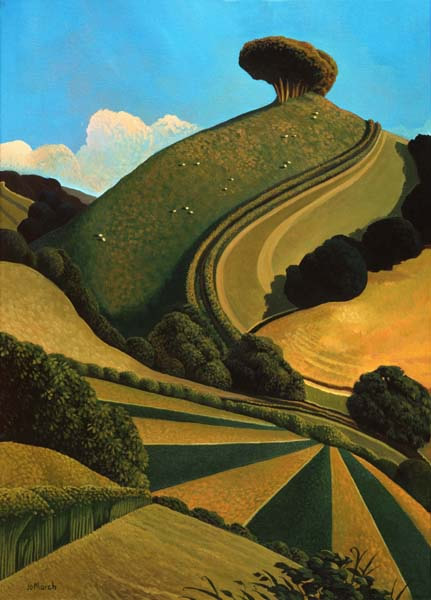
IMAGE: Lucketts (2005) by Jo March available from Tabretts.

Wednesday, September 13, 2006

Blazes She Tie Ye

Rose petals fall into both lakes
Eyes of the woman
Beside the fire


another haiku Leafmelt is over at Rubedo.

Thursday, August 31, 2006

Jeremiad


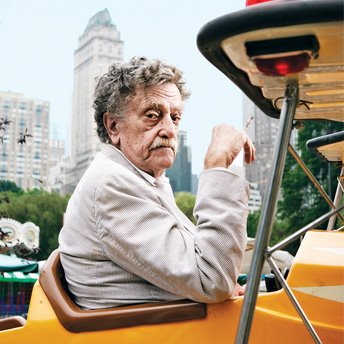
Just back from Barcelona, living the good life for a while. How many more years will that be possible? Not that I think that life will be "bad" per se, but it's difficult to be entirely optimistic. And this kind of week long city break using cheap airlines is almost certainly in its final days. I read Derrick Jensen's A Language Older Than Words while away, which is a truly great book - and I'm now started on Book 1 of his new Endgame opus. Dig the pic? I do, it accompanies a new interview with Kurt Vonnegut in the latest Rolling Stone in which he adds his voice to the peak oil debate "What's going to happen is, very soon, we're going to run out of petroleum, and everything depends on petroleum". You can read some of the piece "Vonnegut's Apocalypse" online. Squeezed out another maudlin poem "Jagged Mountain" while away, you can read it over at Rubedo.

Tuesday, August 15, 2006

I cannot claim possession of the rain


I had plans we never spoke of
Which evaporate now
Off the flat plain of the future
To condense elsewhere
For someone else
Some others else
To rain on their parades
Or saturate their deserts with love
And perhaps some of this precipitation
Will fall again for me
Or fall again for her.

I cannot claim possession of the rain
Nor forecast the weather
Or foretell the future
Tell dry spells from wet
It is a mystery to me
Why the clouds come and go.

I write my name
In the mist on the window
And peer through the letters
To perceive
What is written outside
I trace a heart
In a separate pane
And watch it bleed
Down to the frame

Wednesday, August 09, 2006

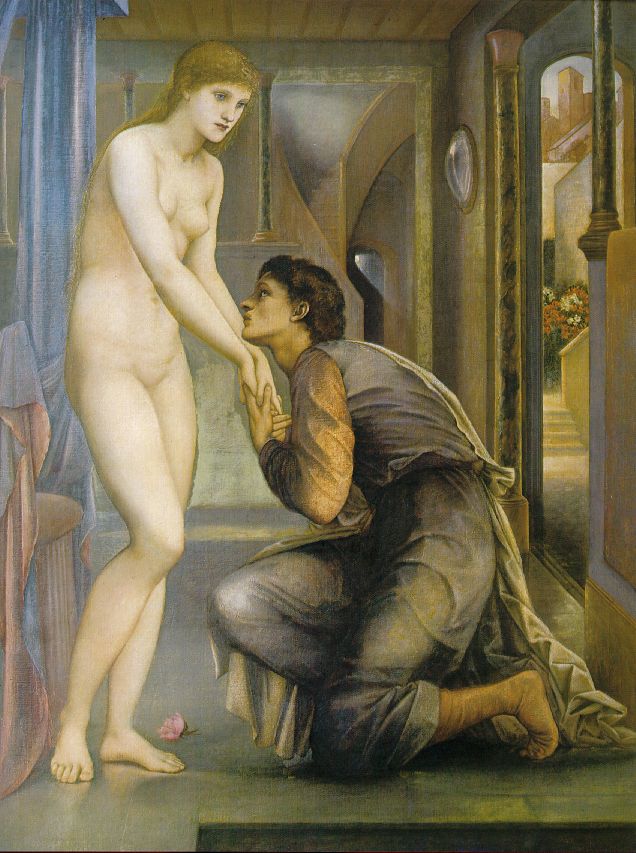
Such is the way that pedestals are made


Such is the way that pedestals are made
And women raised upon them
So our minds carve them from themselves
Sometimes to find a finer model
Than their art alone would allow
A realisation of all they could be.
Sometimes to make a fiction
That’s serves neither party well
A transactional device
That hides the truth of both
A mode of exchange
Become all that is exchanged.

And yet that line of your cheek
Is a slice into marble
This line of your neck
Is divine where it meets the shoulder
If it’s not the depths of heaven
That darken your eyes so
What seeds of obsidian
Did god plant there instead?

Wednesday, July 26, 2006

Israeli bombing of Beirut
Three new poems over at Rubedo (perhaps I should have saved a couple for here?). I seem stuck on war metaphors right now - I wonder why that would be? It's all too easy to see all these rumblings in the Middle East (or South West Asia) as the beginnings of World War III, or an escalation in the long war for oil.

President Ahmadinejad in Iran warns of "a brewing and dangerous storm". King Abdullah of Saudi Arabia warns that "if the option of peace fails as a result of Israeli arrogance, then the only option remaining will be war, and God alone knows what the region would witness in a conflict that would spare no one". Oh and its not like things have eased up in Iraq or Afghanistan while all this has been going on.

Monday, June 12, 2006

Rubedo refelections

Things have been a little quiet on Yourmindfire this last week, due to my administrator duties on two new sites: Rubedo and Mark Jones - Peaces.

Rubedo is currently featuring three new poems by Jon Hellier, an article by Keith Hackwood on "The Absent Anima" on the feminine voice in contemporary ecology, and skip a bit back in the archives and you'll find my most recent article "To burst in the heart of sunrise" on the subject of Cassandra.

Mark Jones - Peaces features 17 poems from a planned forty written by Mark Jones over the last 12 months. Peaces is a meditation on the death of his father and the meaning of Christ.

Rubedo readers will already be familar with Mark Jones's work on the archetypal, these poems show another side of his work.

Tuesday, May 23, 2006

Sickly Spring


This is a strange season, where weather makes odd moves from winter through spring and summer.


Warm then cold, wet then dry.

Still then windy.

The early chill, held back spring a little so that when it arrived the floral world had to squeeze all its seasonal activity into a shorter space than usual.

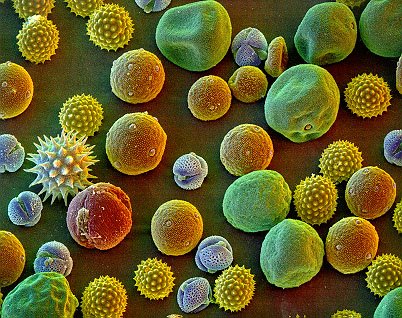
Sickly Spring

Sickly Spring
Postulating blossom on every green surface
Hypertrophic torrents of flowers
Weighing down branches

Wind whipped pollen invading
Every human orifice
Attempting sexual union
With the soft membranes
Of my eyes
Of my nose
My mouth

Impossible congress
That breeds only
Weeping.