Showing posts with label Politics. Show all posts

Friday, March 07, 2008

Office Recycling

Blue Bin


I'm part of a group pushing "Green Issues" up the agenda where I work. We have had some success, but there's still a lot to do. I've created a new Collection on the London Permaculture Flickr site for issues to do with "waste?". One of the included Sets features photos and explanations of the recycling facilities in the offices of Amnesty International in Central London.

The already established provision of paper recycling has recently been bolstered with staff generated schemes for recycling cds/dvds and used batteries.
The group has also successfully encouraged the organisation to take advantage of Islington Council's free recycling service for charities - adding glass, plastic bottles, tins & cans and cardboard to the materials recycled.

Next stop - office composting, dealing with tetrapaks, etc etc....

The Gift

The Gift

The gift
And the feeling behind the gift
The character of the giving
The process and action
Which presented this gift.

A dance around the question
Of selfishness
And selflessness
An attempt to act
In a way which is ‘Right’

To offer each action up
As some recompense
Or sacrifice
For my no doubt myriad other sins?
Failures to take it
To stand where I am
Speak what I think
Not lie
Nor circumvent
Look for easy paths
Short cuts
That avoid a necessary journey.

And in this search for ‘Rightness’
I sense a ghost
Of lost romance
Broken eros
Trying to reform as agape
Afraid of eros
Afraid of breaking.
In a woman
In Love
There was a bridge
out of an isolated sense of self
Love is the Magick
But now where does the bridge lead?

A kiss in the morning can be more dramatic than a drama by Mr. Fancypants

This assignment has led me to reflect on my creativity in a number of ways and also to consider the role that an artistic attitude and creative engagement might play in a human ecology perspective. I will explore this through personal narrative, thoughts around my poem The Gift (which itself reflects on creativity) and interaction with the texts of others.

Over the years I have engaged with creativity in a number of ways, and I remember how as a child I enjoyed the play of art making. Around the time of adolescence my relationship moved from being primarily a producer of creative activity to becoming a receiver and commentator. I studied literature for three years at university and later studied cinema for a year. In between I worked in the art school’s library surrounded by volumes of artistic expression and by creative artists themselves – painters, sculptors, weavers, and performance artists, artists exploring time, space and materials in a thousand different ways.

I had (have) friends who were (are) poets, painters, musicians and my brother makes his living designing clothes. I read and read, I have visited art galleries around the world, worked in cinema archives, maniacally bought and consumed recorded music, seen music performed live innumerable times. Through out much of this time I attended little to my own creativity. In many ways I was like the ‘shadow artist’ described in The Artist’s Way (Cameron, 1995) “Shadow artists often choose shadow careers-those close to the desired art, even parallel to it, but not the art itself”(p.27).

But I was not completely cut off from my own creativity – I wrote poetry, furtively, not for general consumption; and I scribbled, doodled, sketched on hundreds of pieces of scrap paper. I took photographs; I took a class in photography.

As I grew older, I became more confident in expressing myself in these ways – though that expression remained largely without an audience, and while I didn’t hide away what I did neither did I make any effort to share my output. I remained caught in a problematic conception of art and creativity. The need for me create and the value I felt in creativity was tempered by a perceived sense of the low value of my creative output.

I recently encountered the work of psychologist Guggenbühl-Craig on creativity and this formalised a lot of my only partly consciously thoughts. Guggenbühl-Craig divides the concept of creativity into three distinct manifestations, which he describes as: personal creativity, collective creativity and transcendent creativity.

He is dismissive of the first kind, writing that (Guggenbühl-Craig, 1995) “we should not refer to personal creativity as creativity at all”; we should in fact refer to it as “self-development, self-expression or something similar” (p.7). By collective creativity he meant the work of the advertising and fashion industries that attempt to follow and shape the zeitgeist. Finally, in transcendent creativity he identifies what we conventionally consider ‘high art’ – the work of ‘geniuses’ Shakespeare, Bach, Michelangelo etc.

For several years I had been dismissing my creativity as not really “creativity at all”, and thus of little value. I was in fact devaluing my self and my actions, looking back on this now it is easy to see both that this mirrored my sense of political agency and that many others seemed to be trapped by this same dynamic. In placing a low value on what I could personally achieve, and deferring value to others I was handing away my own power. I felt so dwarfed by the attempt to reach that transcendent creativity, the only art in which I was socialized to find value that I tended to not act at all. This is what Cameron (1995) describes as debilitating perfectionism “Part of the game here is lining up the masters and measuring our baby steps against their perfected craft” (p.121).

This inertia, the sense of being daunted by the scale of the task immediately resonates for me with my own and others’ feelings about global ecological problems and issues of social justice. I wondered if there might be support from artists and radical politics that might suggest routes out of this way of thinking.

Audre Lorde (1984) in a perfect challenge to Guggenbühl-Craig’s value division of creativity writes “yes, there is a hierarchy. There is a difference between painting a back fence and writing a poem, but only one of quantity. And there is, for me, no difference-between writing a good poem and moving into sunlight against the body of a woman I love” (p.58).

I found that the surrealists spoke of a ‘communism of genius’, and that the situationists made a revolutionary call for an ‘art made by all or not at all’ (Debord, 1957). Similar sentiments to Lorde’s were evident in the Fluxus movement (Higgins, 1984) “They said: "Hey! - coffee cups can be more beautiful than fancy sculptures. A kiss in the morning can be more dramatic than a drama by Mr. Fancypants "” (p.87).

The therapist Thomas Moore (1994) offered another take suggesting the association of creativity with “lofty fantasises of exceptional achievement’” (p.198) is a juvenile romanticization of the creative act. He suggests we bring our idea of creativity down to earth and realise the role of creativity in our everyday lives. He proposes that human creativity is “a participation in the act of God creating the cosmos”, but this lofty claim is rooted in quotidian practice “As we do our daily work, make our homes and marriages, raise our children, and fabricate a culture, we are all being creative” (p.199).

The artist Joseph Beuys formulated an idea of artistic practice he called ‘Social Sculpture’, in which all humans are seen as ‘artists’ responsible for the shaping of a democratic and sustainable social order. He wrote that we are all, everyday working with “invisible materials”:

Thinking Forms - how we mould our thoughts or

Spoken Forms - how we shape our thoughts into words or

SOCIAL SCULPTURE - how we mould and shape the world in which we live:
Sculpture as an evolutionary process; everyone an artist.
(Harlan, 2004)(p.9).

These ideas are all rich to me, fertile with possibilities of how I might live life and how creative practice might play a role in social engagement.


To thine own self be true

As I was considering the creative element of this assignment I was reading Lewis Hyde’s The Gift: How the Creative Spirit Transforms the World. In this book Hyde (2006) makes the case that “the art that matters to us – which moves the heart or revives the soul, or delights the senses, or offers courage for living, however we choose to describe the experience – that work is received by us as a gift is received” (p.xiv). In considering the transactions of art as gift exchanges he writes of other gift economies – a modern one referred to by sociologists is blood donation (Titmuss, 1971).

While I pondered creativity and what this gift quality might mean, I also thought on the importance of these convivial actions that form a sense of world. So I made an appointment and a few weeks ago I donated blood. The session took place in Conway Hall a “hub for free speech and progressive thought” (Anon. 2007).

I took a place on a bed and a phlebotomist examined my left arm. Unable to find a vein, she said she would need to try my other arm and had me turn about head to tail. She quickly found a vein on my right arm but it was close to the surface, it would likely bruise she said, but this might elicit sympathy for me. Calling a colleague over, they considered another vein – one that was deeper, less accessible, reaching which might cause more discomfort.

They successfully punctured it and left me reclining, right hand gripping and releasing to act as a pump – hand become another heart at the extremity of my arm. Now, as I had been turned about, I faced the stage of the main hall and I found myself staring directly at a legend painted upon the proscenium arch:

“TO THINE OWN SELF BE TRUE”

It was the only thing available to read for the 10 minutes of the session, and filled my attention. I remembered it being from Shakespeare’s Hamlet, Polonius’s advice to Laertes. In this period of contemplation two words stood out from the others: “SELF” and “TRUE”. The Human Ecology course has led me to consider anew questions of identity, and my recent reading and thoughts have constellated about ideas of the transpersonal. These ideas have challenged me to think about where my sense of self begins and ends, to consider an expanded sense of self. Now this line also challenged me, forcing me to ask: what I considered “self”, what constituted my “own self” and what was/is “true” to that self? How could I be true to an expanded sense of self? In any creative expression how could I speak truly?

In The Artist’s Way, Cameron (1995) writes of synchronicity, the attractive force of action in the world, that when one acts, one draws towards oneself what one needs (pp.62-67). Although dubious about this idea I was struck in the following week to find the line “to thine own self be true” again: in Cameron (1995) (p.80) and then in Carol Gilligan (1982) (p.135). This question of a true self seemed determined to be confronted.

In not going for the shallow vein, the phlebotomist’s decision to first choose my right arm, my writing arm and then to go for the deeper vein that would be more difficult, possibly painful seemed like a message to deepen my own enquiries. So in writing for this assignment I felt the need to explore in poetry what the creative act might mean to me, how it might function in my life, and what it might serve.

I was aware that my past writing had often been born of emotional turmoil, out of the fracturing of romantic love. Applying more thought to the issue I noticed how questions of love and creativity had become entwined in my imagination.

I realised that, for me, both art and love were a ‘bridge’, a pathway out of a purely individual conception of self toward a communion with other – be that a lover or a more abstracted sense of ‘audience’. When this link had been the bridge of romantic love – the destination had been one other person – but in making a leap from oneself a connection to everything outside the individual self was made possible. The creative act was in itself an act of love because it was about the formation of relationship.

I wondered in The Gift whether perhaps a bridge toward community and a “more-than-human”(Abram, 1997)(p.22) world would require a different kind of love – not eros (romantic love) not even what the ancient Greeks called philia (familial, brotherly love) but something of what Christians understand by the term agape (unconditional ‘divine’ love). I discovered that Lorde (1984) also wrote of this bridging quality of love, but without the need to divide up love she simply expanded the conception of the erotic. She writes that the spiritual and political are connected and “the bridge which connects them is formed by the erotic - the sensual - those physical, emotional, and psychic expressions of what is deepest and strongest and richest within each of us, being shared: the passions of love, in its deepest meanings” (p.56).

I believe that by engaging with our creativity we participate in forging a better world, that an artistic approach to life might form a cornerstone of activism, I feel inspired by these words of Robert Sardello (1999) “Beauty, which will be here defined as the act of living artistically, is love made visible in the world. Artistic living consists of the ability to display, through our actions and attitudes, the power of soul and spirit in the world” (p.209). Shakespeare’s Hamlet which, indirectly, inspired much of my thinking here, has been seen as a core text of the birth of individualism in humanistic thought – a form of consciousness that encouraged an isolated self perception, a separation of what we consider ‘inside’ and ‘outside’ ourselves (Bloom, 1998)(Johnson, 1991)(Lane, 1996). That powerful line “To thine own self be true” also seems to contain the beginnings of another conception however, that of a truer vision of selfhood. Creative engagement, considered as an act of love, of giving, seems a way that I might find that a truer self.

References

Abram, David (1997) The Spell of the Sensuous. New York, Vintage.
Anon. (2007) A Brief History of Conway Hall [online]. Available from: http://www.conwayhall.org.uk/conwayhallhistory.htm [Accessed 13th February 2008].
Bloom, Harold (1998) Shakespeare: The Invention of the Human. New York NY, Riverhead Books.
Cameron, Julia (1995) The Artist’s Way: A Course in Discovering and Recovering your Creative Self. London, Pan Books.
Debord, Guy (1957) Report on the Construction of Situations In: Ken Knabb (Ed. and Trans.) (2006) Situationist International Anthology. Revised and Expanded edition, Bureau of Public Secrets, 2006.
Gilligan, Carol (1982) In a Different Voice: Psychological Theory and Women’s Development. Cambridge MA, Harvard University Press.
Guggenbühl-Craig, Adolf (1995) From the Wrong Side: A Paradoxical Approach to Psychology. Woodstock CN, Spring.
Harlan, Volker (Ed.) (2004) What is Art?: Conversation with Joseph Beuys. Forest Row, Clairview Books.
Higgins, Dick A Child’s History of Fluxus In: Charles Bernstein et al. (eds) (1984) Horizons: The Poetics and Theory of the Intermedia. Carbondale IL, Southern Illinois University Press.
Hyde, Lewis (2006) The Gift: How the Creative Spirit Transforms the World. Edinburgh, Canongate.
Johnson, Robert A. (1991) Transformations: Understanding the Three Levels of Masculine Consciousness. San Francisco CA, HarperCollins.
Knabb, Ken (Ed. and Trans.) (2006) Situationist International Anthology. Revised and Expanded edition, Bureau of Public Secrets, 2006.
Lane, John (1996) A Snake’s Tail Full of Ants: Art, Ecology and Consciousness. Dartington, Resurgence).
Lorde, Audre Uses of the Erotic: The Erotic as Power In: Audre Lorde (1984) Sister Outsider. Freedom CA, The Crossing Press.
Moore, Thomas (1994) Care of the Soul: A Guide for Cultivating Depth and Sacredness in Everyday Life. New York NY, HarperPerennial.
Sardello, Robert (1999) Freeing the Soul from Fear. New York NY, Riverhead Books.
Titmuss, Richard M. (1971) The Gift Relationship: From Human Blood to Social Policy. London, George Allen & Unwin.

Thursday, March 01, 2007

An Inconvenient Truth


Another tip from Keith, the full version of Al Gore's climate change documentary An Inconvenient Truth.

Watch it here by clicking above. Taken from the source on Daily Motion.

(To good to be true (inconveniently) the producers would prefer you not to see this film for free I'm afraid. It's now been taken down)

The official site for the film is here, and features more information including a free downloadable "companion educational guide".


Support the Campaign Against Climate Change.

Tuesday, February 27, 2007

Sites for sore Is

There’s been a slight site redesign, more forced on me than chosen by the “modernising” ethic of the new blogger… anyway that’s boring geekspeak, I’m falling asleep already myself. In the course of putting the site back together again I had to re-upload the banner links in the sidebar, and this seems a useful point to reflect on those:


The Oil Depletion Protocol

A Plan for a Sensible Energy Future...
As we move into an era of oil depletion and energy constraint, everything from transportation to medicine to food to climate change response strategies will be affected. Almost everything we do is dependent on oil.
The transition to a future of reduced oil supply will require the development of clean, reliable, and renewable energy sources and reduced oil production and consumption. The Oil Depletion Protocol will allow us to accomplish both - simply, conservatively, and cooperatively. It is a plan for a sensible energy future.”

The oil depletion protocol is a plan to move the planet through the end of the fossil fuel era by getting the countries of the world to sign up to a simple plan: oil importing countries reduce their annual imports by the global depletion rate; and oil exporting countries reduce their annual exports by their national depletion rate.

My good friend Keith has recently added a new e-petition on the 10 Downing Street website calling on the UK to sign up to the Oil Depletion Protocol; you can add your voice to the call here.

Richard Heinberg author of the book The Oil Depletion Protocol has been interviewed recently speaking on the subject here.


Irrepressible

This Amnesty International campaign seeks to show that online or offline the human voice and human rights are impossible to repress. Bloggers around the world are encouraged to carry the Irrepressible badge which will display material which has suffered from attempts at political censorship. Individual are also encouraged to sign up to a pledge on Internet Freedom. Learn more here.

Monday, February 26, 2007

Thursday, February 22, 2007

Slumming It

"The city is our ark in which we might survive the environmental turmoil of the next century. Genuinely urban cities are the most environmentally efficient form of existing with nature that we possess because they can substitute public luxury for private or household consumption. They can square the circle between environmental sustainability and a decent standard of living. I mean, however big your library is or vast your swimming pool, it'll never be the same as the New York Public Library or a great public pool. No mansion, no San Simeon, will ever be the equivalent of Central Park or Broadway."

Mile Davis interviewed by Tom Engelhardt in “Tomdispatch Interview: Mike Davis, Green Zones and Slum Cities


On Monday evening I went over to RIBA (the Royal Institute of British Architects) to see a talk by Mike Davis, the American cultural historian, political activist, social commentator etc. (you may remember me linking to his piece on Dubai in a post last year). Davis is in London all week doing a series of events on different subjects ranging from the future of the “New Left” to his new book: Buda’s Wagon: A Brief. History of the Car bomb.

The RIBA event was billed in different places as being about “Architecture and Climate Change” or his earlier book Planet of Slums. I was happy to hear about either, and it actually turned out to be about both and about much more. The issue of climate change was neatly folded back on to and revealed in the light of the economic hegemony of neo-liberal globalisation.

Having become pretty disillusioned with “leftist” politics and generally feeling that, while the intellectual analyses and critical techniques of Marxist and Socialist thought were still valuable, close association with these as part of a political programme was an ideological trap that kept us in a dualistic dead end – it was amazingly invigorating to be shaken about a bit by a serious hardcore mind from the Left.

The social and ecological strands met in an examination of the emerging “landscapes of inequality”, where resource depletion and climactic change are already causing the migrations and tensions over migration which many see as an unavoidable part of the global future. Davis focussed on the American South West, especially the US/Mexico borderlands – the area he is most familiar with – but also referred to the analogous spaces of the Mediterranean, and the near Middle East.

I went to the talk imagining that Davis would be outside the energy descent sphere and that I would be taking what he said and doing my own mental associations and analysis to assimilate what I learnt there with what I’m learning from elsewhere. It quickly became apparent that I wouldn’t be required to make the connections alone – “peak oil” and “peak water” rolled off Davis’ tongue with familiarity, he referred to suburbanisation and Kunstler, he could see what was coming.

When it came to the environmental issues, Davis reinforced what I’m increasingly learning: that the necessity for consensus in the IPCC report, and the lead in time on the data it is produced from mean that it reflects a “moderate” view far from the beliefs and predictions of many serious and significant climate analysts, and that new information is already radically reshaping our view of what might be currently occurring. Most significant is the rising body of opinion and data indicating rapid melting of the Greenland and Antarctic ice shelves, concomitant sea level rises, the passing of several significant tipping points, and the possibility that, as Lovelock suggests, the Earth is adjusting to a new hot state – that we could be seeing the end of the Holocene.

After years of it being on my list of “to reads”, Davis’ compelling prose style has finally led to me picking up his “LA book” City of Quartz, which is excellent and I think that pretty much everything else he has written is going to have to follow… One thing I am especially interested in following up on, is encapsulated in the quote at the top of the entry. A lot of my current thoughts are about the possibility of Transition Cities - a scaled up version of the Transition Town idea. My gut feeling was that a city the size of London (let alone one the size of Bombay or Karachi say) could not effectively and sustainably function in a state of energy descent. Recent conversations and other inputs (not least Stewart Brand's "City Planet" lecture at the Long Now Foundation) have encouraged me to re-examine this supposition. I will return to this issue as my ideas develop.

Thursday, February 15, 2007

Rethink Trident

I’ve talked about this before – nuclear weapons are a nonsense. In the UK we have an opportunity again to call a halt to this madness. Let’s not replace Trident.

Today the Compass Parliamentary Group launched RETHINK TRIDENT with a front page story in the Independent.

This is what they have to say on the matter and how you can help:

"The Government is proposing to replace the UK’s fleet of Trident nuclear submarines and extend the life of existing missiles in plans that carry an estimated cost of £20bn. But they have given MP’s, scientists and campaigners just three months to weigh up the proposals, due to come before Parliament in mid-March.

Jon Trickett MP, Chair of the Compass Parliamentary Group, has been working to construct an umbrella group of organisations who believe that the case for the renewal of the Trident nuclear deterrent has not been sufficiently made, and that the timeframe for parliamentary approval of the decision is premature and insufficient.

The initiative - RETHINK TRIDENT – is supported by the following organisations: United Nations Association of Great Britain, One World Trust, Friends of the Earth, Scientists for Global Responsibility, War on Want, National Union of Students, British American Security Information Council (BASIC), SERA, MEDACT, People and Planet, Greenpeace, Oxford Research Group, CND, UNISON and CWU.

Today RETHINK TRIDENT released a statement endorsed by a Committee of 100 including faith leaders; academics; prominent politicians from all parties; leading authors and poets; musicians; and celebrities.

The full statement reads: We believe that:

- Britain should not be rushed into a premature decision to replace its “Trident” nuclear weapons system;
- More time should be taken for Parliamentary and public scrutiny and debate;
- The urgent need is both to halt the spread of nuclear weapons to new countries, and for all states which possess them to move more rapidly and substantially towards nuclear disarmament;
- Therefore the priority for the UK government should be launching a renewed diplomatic initiative to seek a breakthrough in disarmament and non-proliferation negotiations, as it has taken a lead in relation to such global challenges as climate change and acute poverty.

The Archbishop of Canterbury Dr Rowan Williams; Professor Stephen Hawking; Bianca Jagger and Vivienne Westwood are amongst those who put their names to the statement. (view the full list).

The statement and the broad-base of support that we have worked to secure are intended to encourage MPs to support an amendment along the same lines as the statement. The Compass Parliamentary Group will work cross-party to ensure the amendment gets the necessary support.

This is our only chance to mobilise in the Commons to prevent Trident being renewed – calculations are that we will not win on an outright ‘no’ vote but have much more chance on a ‘the case hasn’t yet been made’ vote. If the Bill goes through as the Government proposes it will be the end of the matter for the foreseeable future."


Please lobby your MP to support the RETHINK TRIDENT initiative! For details on how to contact your MP click on to http://www.upmystreet.com/commons/l/

If you’re not already, please become a member of Compass and help support our work including this important campaign, join at http://www.compassonline.org.uk/join.asp

Sign up to the RETHINK TRIDENT public debate taking place at 7pm in Parliament on Tuesday 27 February 2007, full details at: http://www.compassonline.org.uk/events.asp

Sign the petition against TRIDENT at the 10 Downing Street website:
http://petitions.pm.gov.uk/trident/

March against TRIDENT on 24th February assemble 12 noon at Speakers Corner then proceed to rally in Trafalgar Square. Flyer here: http://www.cnduk.org/pages/24feb.pdf

Thursday, January 25, 2007

Art (not just) for Art's Sake


Last year I read the revised edition of Suzi Gablik's 1984 book Has Modernism Failed which dealt quite a lot with how divorced from the "world" art was becoming in the 20th Century - disappearing up its own fundament in a post-modern frenzy of self-congratulation and self-flagellation.

Well here we are in the 21st Century, I wonder if anything is different? I think there is a movement towards more meaningful engagement - but perhaps that is because I don't really look to the art world "greats", the largely male celebrity figures of the art world for my artistic fix. I'd rather stick with the marginal figures, the unknowns, the gallery system rejects and refuseniks. I don't really want some totalitarian style social realism, neither am I normally turned on by agit-prop - nevertheless I do sometimes enjoy an art piece which actually says something.


I've recently seen a few things that "say something" which I've quite enjoyed. Graphic work by James Joyce for the Stop Climate Chaos campaign - some of his work is currently on display at The Social. Photo-montages by veteran trouble maker Peter Kennard (sadly I missed his recent exhibition). Christian Brett and Gee Vaucher's installation at the Gillespie gallery last year. In these works the politics, while central, do not take over to the denigration of their artistic appeal. That is to say that the aesthetics and the politics are in symbiosis, rather than one being in service to the other.

But for some reason I still find Mark Wallinger's Tate Britain installation "State Britain" a bit wanky. Not that I have seen it in the flesh, but the whole idea seems to be to take a political act and turn into an artistic one. I think maybe I'm looking for something going in the opposite direction?

IMAGES: Santa's Ghetto (2006) by Peter Kennard; Dump the Dinosaurs (2006) by James Joyce; the sound of stones in the glass house (2006) by Christian Brett and Gee Vaucher; and Brian Haw's Protest (2006?) photographed by Mark Wallinger.

Friday, January 19, 2007

Call Me A Kaafir


The mother and father are your attachment to beliefs and blood ties and desires and comforting habits. Don't listen to them! They seem to protect, but they imprison. They are your worst enemies. They make you afraid of living in emptiness.”
The Essential Rumi, translations by Coleman Barks with John Moyne (Harper, San Francisco, 1997)


I do not believe in Belief. But this is an Age of Faith, and there are so many militant creeds that, in self-defence, one has to formulate a creed of one's own. Tolerance, good temper and sympathy are no longer enough in a world which is rent by religious and racial persecution, in a world where ignorance rules, and Science, who ought to have ruled, plays the subservient pimp. Tolerance, good temper and sympathy - they are what matter really, and if the human race is not to collapse they must come to the front before long. But for the moment they are not enough, their action is no stronger than a flower, battered beneath a military jackboot. They want stiffening, even if the process coarsens them. Faith, to my mind, is a stiffening process, a sort of mental starch, which ought to be applied as sparingly as possible. I dislike the stuff. I do not believe in it, for its own sake, at all. Herein I probably differ from most people, who believe in Belief, and are only sorry they cannot swallow even more than they do. My law-givers are Erasmus and Montaigne, not Moses and St Paul. My temple stands not upon Mount Moriah but in that Elysian Field where even the immoral are admitted. My motto is: "Lord, I disbelieve - help thou my unbelief."
E.M Forster “What I Believe” in Two Cheers for Democracy (1951)


Everywhere these days I seem to get into conversations about religion, about faith, about belief. As an adolescent I chose a vigorous atheism, a faith in science, in an enlightened secular society. I wanted to throw off a cultural attachment to unquestioning belief, an inheritance in which the past is our parent. But it didn’t really seem a difficult choice, I felt that the world was sloughing off false beliefs and moving toward a reasoned future, logic would eventually eradicate systemic flaws like monopoly capitalism, nuclear weapons etc etc. Since then I have mixed with friends who have traversed worlds of spirituality and mysticism – I’ve remained a tough nut to crack, but I have gained more respect, tolerance and open mindedness about the spiritual path. Not for religion mind, not for the religio – the obligation, the bond, the submission.

And now a debate I thought was over is all around me, fundamentalism in many forms manifesting in the world – Western Imperialist, Right wing Christianity, Zionism, Wahhabism. All of it to my mind - fascist.

That ‘spiritual’ belief can lead people towards violence, hatred, oppression is so amazingly depressing it’s difficult to know how to react to it. In me it evokes that adolescent spirit which determined to throw off unthinking for intelligence, for inquiry. It stiffens me as Forster says, it makes me say: "I am a Kaafir" – an unbeliever.

A recent television documentary - Dispatches – Undercover Mosque (Channel 4, 15th January 2007) [widely available on YouTube] revealed some of the hate speak being traded in radical mosques – homophobia, misogyny, xenophobia, intolerance. In conversation last night a friend and I despaired at this version of Islam, wished that other followers of the faith were more visible. Perhaps it is too easy to say “what about the Sufis?”, but isn’t it also too easy to concentrate on the purveyors of hate?

Those who trade in hate cover their weakness in many faiths, ideologies, politics – I have no wish to isolate radical Islamists.

I believe in a perennial wisdom that is in all faiths and yet is also felt by the faithless.

I believe in LOVE.


Like This

If anyone asks you
how the perfect satisfaction
of all our sexual wanting
will look, lift your face
and say,
Like this.

When someone mentions the gracefulness
of the nightsky, climb up on the roof
and dance and say,
Like this?

If anyone wants to know what "spirit" is,
or what "God's fragrance" means,
lean your head toward him or her.
Keep your face there close.
Like this.

When someone quotes the old poetic image
about clouds gradually uncovering the moon,
slowly loosen knot by knot the strings
of your robe.
Like this?

If anyone wonders how Jesus raised the dead,
don't try to explain the miracle.
Kiss me on the lips.
Like this. Like this.

When someone asks what it means
to "die for love," point
here.

If someone asks how tall I am, frown
and measure with your fingers the space
between the creases on your forehead.
This tall.

The soul sometimes leaves the body, then returns.
When someone doesn't believe that,
walk back into my house.
Like this.

When lovers moan,
they're telling our story.
Like this.

I am a sky where spirits live.
Stare into this deepening blue,
while the breeze says a secret.
Like this.

When someone asks what there is to do,
light the candle in his hand.
Like this.

How did Joseph's scent come to Jacob?
Huuuu.

How did Jacob's sight return?
Huuuuu.

A little wind cleans the eyes.
Like this.

When Shams comes back from Tabriz,
he'll put just his head around the edge
of the door to surprise us.
Like this.

[Rumi, Translated By Coleman Barks]

Thursday, January 11, 2007

In Barbarity There Are No Comparisons


I will say nothing about
Nuremberg. In barbarity there are no comparisons. Whether it is here or there, it is all “here”.”

Gandhi, Letter To Prema Kantak, October 16, 1946


In a ghoulish manner, but with an intellectual excuse to paste over my amorality I went on to YouTube last week found the full version of the Saddam execution and downloaded it (using firefox/greasemonkey) [I wont post a link to that, I’m sure you can find it yourself if you “need” to].

In the presentations I do on ITN and Reuters news material as part of my job I often like to find archival material that reflects or interacts with contemporary news events. The film of Saddam's execution and the resulting controversy seemed an excellent topic to pursue as it includes moving image technology and "news value" as an inherent part of the story.

An obvious historical event to use as a point of comparison seemed to me to be the Nuremberg trials and subsequent executions of leading Nazi's - so I went back and took a look at the newsreel record of that.

Gaumont British News devoted a whole issue to the verdict and sentencing of the Nazi's - however it states that they were not allowed to film the sentencing. Using images of the court doors being closed in front of them they overlay audio of Goering being sentenced to death by hanging. Gaumont did not cover the executions themselves at all (in the first issue after the executions took place Gaumont leads with racing from Newmarket).

British Pathe News issued a story over the dilemma of whether or not to show the executions, preceding the hangings they ran a screen and press publicity campaign asking their audience their opinion. They received 980 replies. 950 of which stated they did not think the hangings should be shown. The Pathe story also mentions questions being asked in the House of Commons regarding the showing of the executions.

The American edition of Universal News, illustrated the execution part of their coverage with footage of American soldiers hanging a weighted dummy from the gallows, thus getting their money shot without showing the real deal.

British Movietone News featured the American reporter Kingsbury Smith, the only journalist to witness the executions, speaking about what he saw of the Nazis being hanged, including the detail that following the hangings the dead body of Goering (who committed suicide a few hours before the executions) was brought in to demonstrate to the witnesses that he too was dead. Kingsbury Smith didn’t reveal in this piece, as he would in print, that a miscalculation of the weight of Julius Streicher meant that he did not die instantly:

He went down kicking. When the rope snapped taut with the body swinging wildly, groans could be heard from within the concealed interior of the scaffold. Finally, the hangman, who had descended from the gallows platform, lifted the black canvas curtain and went inside. Something happened that put a stop to the groans and brought the rope to a standstill. After it was over I was not in the mood to ask what he did, but I assume that he grabbed the swinging body of and pulled down on it. We were all of the opinion that Streicher had strangled.”

Kingsbury Smith, The Execution of Nazi War Criminals, 16 October 1946 for the International News Service

Saddam Hussein's execution, in addition to everything else it is, seems emblematic of a new era of the audio-visual medium – one that circumvents the mainstream media, News or otherwise. This event was filmed on a mobile phone, spread around the world using P2P technology and then further distributed, manipulated and repurposed on web 2.0 sites like YouTube.

It shows what the mainstream news media will not show (and perhaps for very good reasons). [The Guardian faced harsh criticism, including from a large percentage of its own journalists for showing a still from the film on its front page]. It fits into a genre that includes the militia beheadings from Iraq - and has a relationship with the "last messages" of suicide bombers, Jihadi propaganda from around the world (check Internet Archive for the Chechen and Ossetian end of this), but also the footage taken in Falluja by US Marines helmet mounted cameras (available on YouTube in both "raw" formats and in versions edited to heavy metal soundtracks - glorifying the destruction taking place). Since Vietnam, battlefield coverage has largely been absent from the news, these new technologies are re-revealing what it's actually like in a war – fucking horrible.

Of course there is also that argument that it is pornography that leads new developments in audio-visual technology - and perhaps all this stuff is pornography too? Hearing about some piece of film featuring this internationally known figure in a compromising position that the media wont show, knowing that you can probably find it on the internet, searching for it, downloading it, sharing it with others - are we talking about the execution of Saddam Hussein or 'One Night in Paris'? What are our motivations?

Tuesday, January 09, 2007

It is poverty to decide that a child must die


It is poverty to decide that a child must die so that you may live as you wish.”
Mother Theresa of Calcutta


The “Money” section of Saturday’s Guardian newspaper had a half page article titled “The green revolution: Why wheat is luring the breadwinners” – which detailed how commodity dealers are taking advantage of the increase in global wheat prices.

After making millions from pumping up the price of copper, zinc and other metals to record levels last year, speculators are piling into “soft” commodities such as wheat and corn amid drought warnings and global shortages

Is this what they mean when they say the market will find solutions to the problems of global warming, fossil fuel decline etc.?

At present these increases in price are happily absorbed in the shopping baskets of the West, pence or cents on bread being almost invisible to all but the poorest parts of the American and European populations. The wholesale disengagement of price from value in the west, where discounting, loss leaders, sales, just-in-time delivery, e-commerce, globalised production, packaged products and services etc have confused everybody to the point of not understanding what anything is really worth anymore – have made the poorest parts of society practically blind to price rises in individual products too (Although Monday’s The Scotsman reports that “BREAD prices are set to burst through the £1-a-loaf barrier because of rising worldwide flour prices” seeing this as another burden on the British public already facing energy price rises, and increased mortgage payments due to interest rate rises). Avid readers will remember me touching on this issue last November.

In the Third World though these same price rises of staple foods can be devastating, and where they represent, as here, scarcity – inevitably lead to malnourishment, hunger and famine. If global climate change is responsible for the poor harvests, as it appears to be, then here we are seeing again how the poorest of the world, the wretched of the earth will feel the pain of our folly first.

Much is currently being written about how last years fall back in oil prices, reflected the Third World just being priced out of the market. Countries that cannot afford oil at $50 a barrel or above have just stopped buying - freeing up some supply for those who can, filling the gap between rising demand (in the West, China, India etc.) and static supply.

Climate change, peak oil – the world’s poor are acting as our buffer, but for how long? And what about the resulting effects – events on the Horn of Africa providing a current obvious example. Floods followed by drought in the late 1990s set the desperate stage for the actions that have followed in Somalia. The photograph of the dead child above is from the 1992 famine in Somalia, according to the World Health Organisation currently a quarter of Somali children die before reaching the age of five. Is it any wonder that people turn to extreme action, fundamentalist faiths in the face of this situation? As the USA bombs there, as another front of its “war on terror”, I wonder how many of the children who survive will grow up understanding their actions, understanding the behaviour of the West.

Friday, December 08, 2006

The Whole of our Efforts

I got into an interesting debate this week in the comments section of Transition Culture. Rob posted a short entry on Wednesday titled “The Idiocy of Renewing Trident” where he reflects on how the £20 billion being pledged for renewal of the Trident nuclear missile system could be better spent on energy descent preparations.

Jason Cole writing in response to Rob’s piece presents his belief that altering the UK’s policy in regards to nuclear weapons would be extremely difficult if not impossible. In the subsequent exchange between Jason and myself, he indicates that the issues of Peak Oil and Climate Change are where we should be directing the “whole of our efforts”, and that campaigning simultaneously for issues like nuclear disarmament is “pointless” and a “distraction”. I believe Jason means that these other issues will distract people from focussing on the most important issues, he also says: “speeches made about Nuclear Weapons during a Climate Change march only serves to dilute the message”.

In the course of the exchange between Jason and myself I argued both that these issues were intertwined and that it was worthwhile campaigning for nuclear disarmament, that we could effect change in this area.

I do believe that Jason’s position is one that we must consider however. Should we just focus on the most important issues to the exclusion of all others, however worthy? We have limited amounts of personal energy – how can we best use that to effect change? Should we be using some kind of personal EROEI equation, where we consider the ‘energy return’ as positive change effected in the system? – on this basis we only would only campaign on the issues where we could effect most change.

This could be related to the idea I first encountered in Permaculture of your personal ‘circle of influence’ and your ‘circle of concern’ (I believe that this idea originates from Stephen R. Covey’s book 'The 7 Habits of Highly Effective People'). Covey writes:

"In looking at ways to influence and change our surroundings it is helpful to notice where we focus our time and energy. We each have a wide range of concerns--our health, our family, problems at work, the national debt, etc., and it is these things in our lives that make up our Circle of Concern.”

“As we look at those things within our Circle of Concern, it becomes apparent that there are some things over which we have no real control and others that we can do something about. We could identify those concerns in the latter group by circumscribing them in a smaller Circle of Influence.”

Covey continues that effective people focus on their Circle of Influence because they “are smart, they are value driven, they read reality, and they know what's needed” and because “[t]hey work on the things they can do something about”. By focusing their energies in this way “The nature of their energy is positive, enlarging, and magnifying, causing their Circle of Influence to increase.”

When we consider these big issues which concern us like Peak Oil, Climate Change, Nuclear Weapons we are liable initially to feel dwarfed by their enormity. However, when we consider what we can influence and act on that we empower ourselves. It may be easier to see how our circle of influence could include elements related to Peak Oil and Climate Change – we can reduce our personal energy use in a number of ways, we can inform ourselves about the issues, we can shop locally, we can learn how to live more sustainable lives. It may be harder to see how our circle of influence extends to nuclear disarmament, and many like Jason might suggest it does not. Here however are some examples of what you might do:

1) Sign the E-Petition at the 10 Downing Street website:

We the undersigned petition the Prime Minister to champion the Nuclear Non-Proliferation Treaty, by not replacing the Trident nuclear weapons system.”

This is one of the most popular e-petitions on the site and has 5,300 signatories to date.

2) Join the Big Trident Debate pressing the government for a full debate on the issue of replacing the Trident system by adding your name to the Big Trident Debate Statement.

3) Contact your MP and express your opinion on the issue, ask them to support the Alternative White Paper ‘Safer Britain, Safer World: The decision not to replace Trident’.

4) Join the Campaign for Nuclear Disarmament

5) If you feeling active join the blockade of the Atomic Weapons Establishment at Aldermaston next Monday (11th December).

Wednesday, December 06, 2006

Climate Breakdown


Yesterday I went to an event to a public discussion ‘Climate Breakdown: Can it Be Controlled? Can We Prevent it?” arranged by the Pugwash Group. Pugwash is an international movement of scientists and others with a professional concern about the social impact of science and seeking ways to prevent its misuse (They are named after the site of their first meeting the village of Pugwash in Nova Scotia, and sadly have no connection to Captain Pugwash).

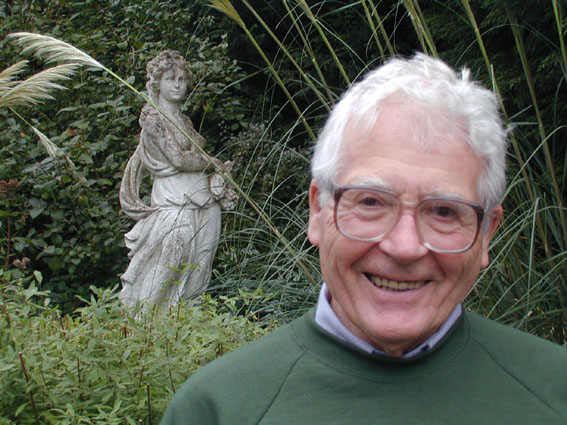
There were three speakers: Sir Crispin Tickell; Professor Peter Cox; and, (the big draw for me as well as other celeb spotters of the science world I suspect) Dr James Lovelock.

Lovelock spoke first on the theme ‘Global Heating: a hazard comparable to, or greater than, nuclear warfare’. I am pretty aware of Lovelock’s recent doomy prognostications despite not having read The Revenge of Gaia, nevertheless it was still quite sobering to hear what he openly described as his “apocalyptic view”.

He predicts that global warming (or global heating, as he pointedly referred to it throughout) will cause droughts, storms and floods that will make most of the world uninhabitable for humans. The resulting planet will “support only a remnant of current population” and they will be “driven to the Arctic”, “island refuges like the UK, New Zealand and Japan” and a “few continental oases” while the rest of the world becomes a “hot and barren desert”.

Lovelock believes that we must accept our limitations and realise that we are not qualified to become “climate regulators”, that it is “hubris” to think we can act as stewards or sustainable developers. International Agencies are not up to the task of dealing with the issue of global climate change and we must make efforts to “save ourselves” and make a proper managed retreat to the Arctic basin, island refuges and continental oases or else face the inevitable rout.

The other two speakers did not challenge Lovelock’s opinion, and one gathered that while he is at the extreme of current thinking – he is within current thinking. He may be using the most extreme modelling, but he is using modelling coming out of serious climate science.

Professor Peter Cox spoke on the theme ‘Climate change science: knowns and unknowns’ and provided a useful round-up of the certainties of contemporary climate science, the basis on which we make further extrapolations into the unknown. This was also pretty sobering stuff in itself, even when you’ve heard much of it before:

  • Global mean temperature has increased by 0.7 degrees C since the late 19th century. Most of this rise has occurred since 1980.
  • The ten warmest years on record have occurred since 1990. 6 of the 7 warmest have occurred since 2000.
  • No natural factors can explain the post 1980 warming. The warming is however consistent with anthropogenic effects.
  • Tropical cyclones have increased in destructiveness over the last 30 years.
  • A global rise in temperature of around 1.5 degrees C by 2030-2040 is now inevitable. Nothing we do now can stop that, decisions we make now will however decide the amount of temperature rise faced by future generations.
  • Future modelling scenarios show that by 2100 warming will be between 2 degrees C and 5 degrees C.
  • Realisation of many of the models, up to and including the one indicating a 5 degree C rise, would result in the total melt of the Greenland ice shelf and the concomitant sea level rise.
  • The change in climate we are looking at is on the scale of the change between a glacial and interglacial period, but will happen 10 to 100 times faster.

The third speaker Sir Crispin Tickell spoke on ‘The Political and diplomatic hazards’, I have to admit I was a little tired by this point, but he did seem a bit dull and to spend a lot of time name dropping all the famous politicians he’d spoken with and foreign places he’d been. The most interesting parts were his description of Mrs Thatcher as an “eco hero”, and his musings on discussions between China and India regarding glacial ice melt in the Himalayas, changes in monsoon pattern, and sea level rise – all of which will impact both countries massively. In order for real change to occur, Tickell suggested we needed 3 things:

  • Leadership from above.
  • Pressure from below.
  • A ‘benign’ catastrophe, which would prove cause and effect.


He hoped that those in the room would not be affected by the ‘benign’ catastrophe (I wonder how ‘benign’ a catastrophe he was considering). I used to think that a US based climate related catastrophe was the necessary tipping point in global consciousness, but how much has Katrina changed in the States?

I couldn’t stay for the discussion/question session unfortunately so I can’t report on that. I imagine that Lovelock’s support for nuclear would have come up. He did mention nuclear in his presentation, in a slightly contradictory sequence in which he suggested that the USA would respond to climate change with attempts at “techno-fixes” to buy time like sun shades in space or stratospheric particles. These, he said, would be attempts to carry on a business as usual model and wouldn't really be much help. He went straight on from this to promote the role of science and engineering in buying time for the habitability of the Earth and allowing civilization to continue – presenting nuclear energy as a techno-fix.

One thing I hope would have come up is the whole question of economic growth. There did seem to be an underlying belief amongst the speakers that “economic growth” should continue but within a low-carbon society. I think that this unspoken paradigm needed to be brought out in the open and discussed. Tickell did mention in passing that established models of GDP and GNP were misleading, that ‘externalities’ were ignored, and that we needed to think differently about economics, that the teaching of economics should be altered to reflect the global reality. He stopped short of saying what should take the place of what he thought should be removed however – hopefully this came up at question time.

So, all in all, a slightly depressing if informative experience. The solution part of the discussion was limited to Lovelock’s nuclear buy-time techno-fix, Cox’s get business on board with a 30 year business case model, and Tickell’s asides about a low-carbon society. Lovelock’s attitude regarding the ‘hubris’ of trying to act as stewards of the Earth, seemed to tar techno-fixers (Brown Tech and Green Tech in David Holmgren’s terms) and techniques for Earth recovery like Permaculture (Earth Steward-ship in Holmgren’s terms) with the same brush. To the questions the discussion title posed – can climate breakdown be controlled, and can we prevent it? I think the answers to both were “not really, but we may be able to slow things down”.

Never has the need for action been so pressing as now. Do what you can.

Thursday, November 09, 2006

Got Democracy?


As the dust begins to settle, and I reconnect with the news media after a period of ignoring it – I decided this morning to see what’s up with the US mid terms.

Well it appears that the Republicans took a beating, and that Bush is now a ‘lame duck’ president as they say. My initial feeling about this was, great – now violent action against Iran will have to come off the timetable. I don't see any solutions to the Iraq debacle coming out of Democrats taking some power though.

Anyway, that was about as far as it went, I don’t understand enough about US politics to really make much more sense of the whole affair. Then I thought – well let’s look at this a little harder and see if we can learn anything else from this election.

Only 40 % of the electorate bothered to vote, another great success for Western democracy! Is anybody asking how we can try and engage the USA with the idea of democratic politics? Not that UK/Europe is much better - everyone is sick with professional politicians.

I was intrigued by the ‘independents’ who achieved success, who are these people? what do they represent? It’s so below the radar of news coverage here – it’s very difficult to get much sense. Today’s Guardian reveals some interesting facts in its Election Roundup. Not least that this election sees a socialist voted into Senate – heaven forefend! Bernie Sanders seems to have the right kind of campaigning issues, if only there was more of this in the USA.

There have been some successes for the Green Party of the United States in municipal and mayoral elections. The first Green president, or indeed Green revisioning of governance, still seems a way off.

Ralph Nader’s comments on the election are available in an interview on the Democracy Now site – which, whether you like Nader or not, gives some insights to the US political process that I otherwise would have missed.

I couldn’t find much of interest in US Indymedia’s coverage of the elections, but it’s worth checking the site for a feel of what else is going on stateside.

Ran Prieur expresses the deep cynicism about the whole affair which I imagine is much more representative of grass roots feeling than these 'democratic' charades generally reveal.

Friday, October 27, 2006

Nice Try but No Cigar

A major flood at ‘Cigar Lake’ a Canadian uranium mine has further restricted future supplies of the radioactive poison, believed by some to be out energy saviour. Prices have increased again, after having already gone up 54% this year.

From the Bloomberg story:

"Losing Cigar Lake in the uranium world is like the oil market having to deal with the loss of Saudi Arabia,'' Kevin Bambrough, market strategist at Sprott Asset Management Inc. in Toronto, said in an e-mail. Projected full production of 18 million pounds annually at the mine "equates to just over 10 percent of current annual consumption,'' Bambrough said.

As I’ve mentioned before, Canada is the number 1 source of the world’s uranium (30% of world supply), number 2 (or 5 according to this report) is Kazakhstan. The EU is currently courting Kazakhstan to get its hands on more of its supplies of radioactive poison. Let’s hope that human rights were discussed too. How exactly is going nuclear going to increase our "energy security"?

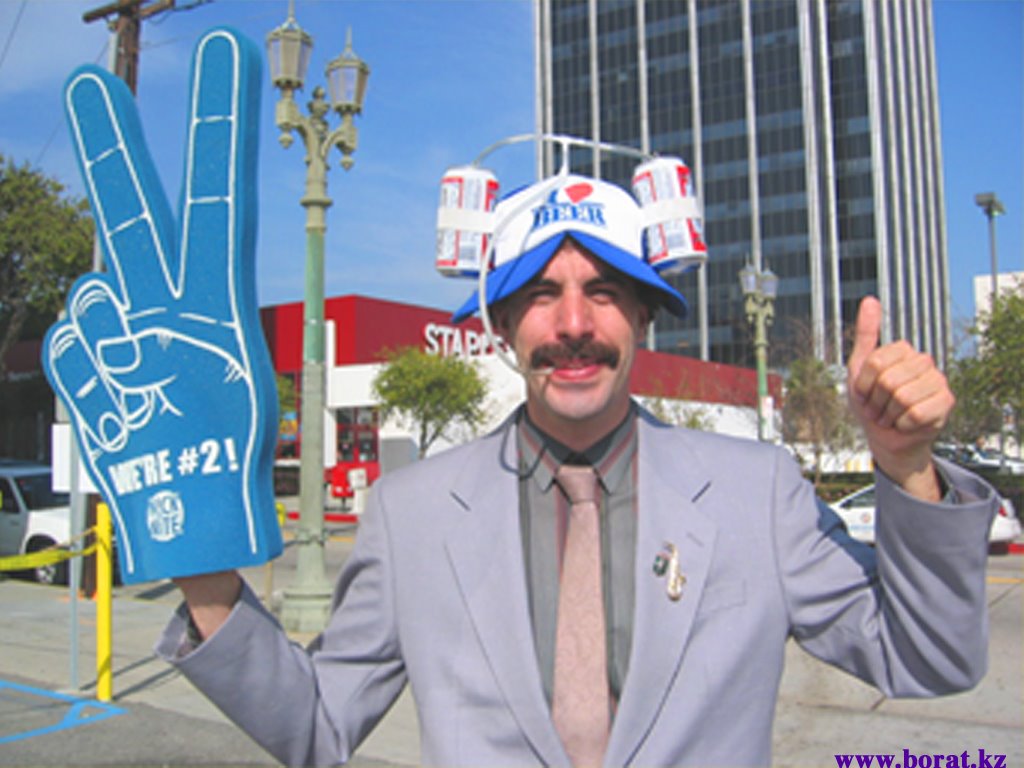
I’m kind of hoping that all the political embarrassment around Borat will be a major factor in derailing a nuclear future.

Just to keep you up to date with the UK nuclear industry (and derailings), here's some of the last weeks goodies: Sunderland train station was evacuated on Wednesday when a train carrying nuclear waste to Sellafield broke down; Hinkley Point B Nuclear power station's two reactor may never re-open after being closed due to problems including "cracks in a reactor's graphite core, and cracks in boiler pipes"; the UK nations are getting into a bitchfest about who has to look after nuclear waste; while Environment Secretary David Milliband is trying to bribe local councils to bury the radioactive poison in their backyards.

Click here for the Europe wide million signature campaign against nuclear power.

Friday, October 13, 2006

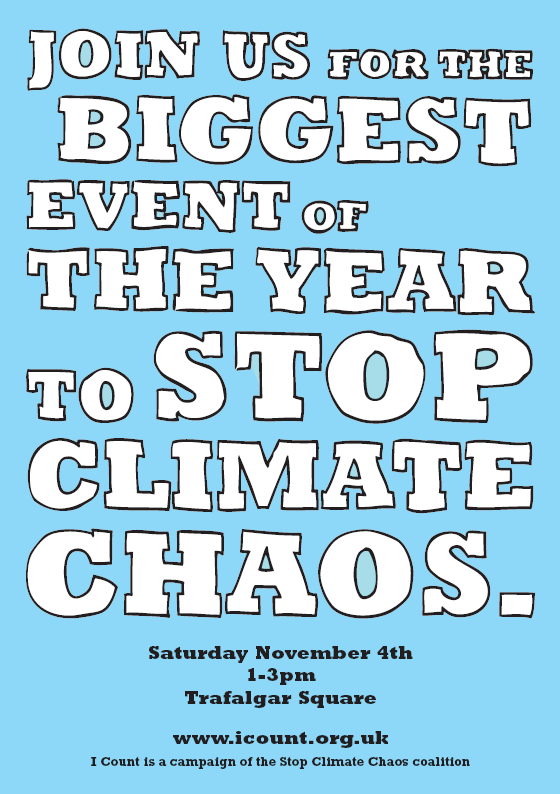
Stop Climate Chaos


Get in on the action - Trafalgar Square 1-3pm, Saturday 4 November.

Make a bigger bang than Bonfire night. Let the government know you care by packing out Trafalgar Square. By joining the thousands in the Square on Saturday November 4 you will be making your voice count.

Whether you care about the environment, global poverty, wildlife or just you and your family, climate change has become the greatest challenge we face. But together we can stop climate chaos.

With entertainment, film, performance, music, and speakers it'll be one of the biggest events of the year. Help deliver some ear bending political noise at a time when there's some serious political stuff going on.

The event takes place on the eve of critical international climate talks in Nairobi, Kenya, where we will be pushing the UK government to show real leadership. And just over a week later we are hoping the Queen will announce the introduction of a climate change bill. This could make year-on-year cuts in carbon dioxide - which is the main cause of climate change - the law.


Monday, October 09, 2006

What's Chosŏnmal for "Nein Danke"?


So while the west continues to piss about in the desert, chanting "it's not about the oil" like some mediaeval penitent making a prayer between each strike on the head with a plank of wood, mumbling between times about the "weapons of mass destruction" etc. etc. - North Korea just goes and does it.

North Korea has announced that its made its first nuclear test, an underground explosion in Gilju in the Hamgyong province. The more nuclear we have, the more nuclear will spread. The more this shit will end up in the hands of people who go "You say mutually assured destruction like it's a bad thing". It really doesn't help when ichiban superpower is high on rapture rhetoric too.

Saw Keith and Helen on Saturday and got an early birthday present, cd single of Roy Harper's "The Death of God". One could quote so many of its lines, but how about for today:

Hoping and praying
And praying and hoping
Praying and hoping to die
Blowing my life away
Taking some others
A new kind of old passer-by
But I won't be passing you by
'Cos I'm the Samaritan
With a bomb in my eye
And my finger on the trigger
Of goodbye

Friday, October 06, 2006

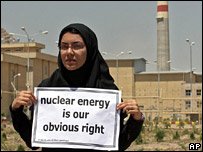
What's Farsi for "Nein Danke"?

Iranian Student outside Isfahan Nuclear Facility
I'm against pretty much all the nuclear industry - weapons, energy the whole lot. I just don't think we have the right to go on producing poisons that will last millennia after our deaths, or that it can ever be right. It's not essentially a spiritual point of view, or a personal philosophical point of view - it's a pragmatic acceptance that creating elements, not seen before on Earth, that have the power to kill for hundreds of centuries is likely to be a bad idea.

That said, I don't really see that the "West" has come up with any reasons good enough to stop Iran from developing nuclear technology. If the rest of the world was retreating from nuclear energy and nuclear weapons there would be a clear global moral argument against any new development. Also there would be fewer atomic scientists, less atomic material, less nuclear expertise and technology to "go astray".

In fact the opposite is the case - the "west" and other countries in the favour of the "west" are gung-ho for new nuclear energy developments. It is increasingly seen as a solution for avoiding global warming, and for assisting in energy security (i.e. dealing with all the oil running out, and what's left mostly being owned by people who don't like us). Now if you were a country whose whole economy depended on fossil fuel exports and you had already passed your own peak oil production point wouldn't you want to join this new energy bandwagon before it was too late?

In terms of nuclear weapons, the "west" similarly shows no sign of retreat. The US military pushes for the development of "tactical" nuclear weapons, atomic bunker busters et al. The UK government gets ready to spend billions on a new nuclear weapons system to replace Trident. Meanwhile countries like Israel, India and Pakistan are allowed nuclear weapons without censure. Iran looks on and sees that while a country without any evidence of WMD (Iraq) is invaded and turned into a pit of chaos, a country that clearly does have WMD (North Korea) is pussyfooted around. Doesn't this indicate that you bloody well better actually have WMD if you want to avoid the USA coming a shit kicking?

So we have an opportunity to stop Nuclear madness here and now, stop nuclear development in the first world and export the moral argument (and the supporting details on peak uranium). Simultaneously we restrict the number of people who possibly could create nuclear industries, and the technology to allow us to do so. Our Atomic scientists will have plenty of exciting work left to do, working out how to make all the crap 50 years of nuclear activity have generated safer for the unborn generations who will share the planet with it.

Thursday, September 28, 2006

1 out of 3 is bad (for 5 a day)


According to a report issued today by the Pesticide Residues Committee (a UK government advisory body) nearly a third of UK food and drink including fruit and vegetables contains residue of pesticides.

The PRC tries to spin this with a 70% of food pesticide free claim, and say the the 30% are below a health concern level. I don't buy it (I buy organic), and neither does the Soil Association who's policy director Peter Melchett has remarked that the committee is being "extraordinarily complacent and unscientific".

We're playing with stuff here that we don't really understand.

Thursday, August 17, 2006

Poodle wars


Just caught up with the latest Kunstler blast on the Middle East (bylined 'Notes of a "Zionist Poodle"' on his blog I note with amusement). Still pretty ranty, but at least he's reached out past the doomed to never be resolved jew/arab liberal frat-riot to try and give some larger perspective. Back on the offensive against 9/11 conspiracy nuts too- now I wanna see Heinberg vs Kunstler in debate on Israel, followed by shirts off Ruppert and Kunstler in a pissed wrestle on the floor - that should add a frisson to Peak Moment Television, I can't wait to see Janaia Donaldson's face as she goes "boys!boys!" -while secretly enjoying man flesh in full on testosterone action.